The ten questions every first-time e-bike buyer asks us
Fifteen years of first visits to a Brooklyn e-bike shop distilled into the ten questions everyone asks, answered with 2026 prices, NY law, and real numbers.
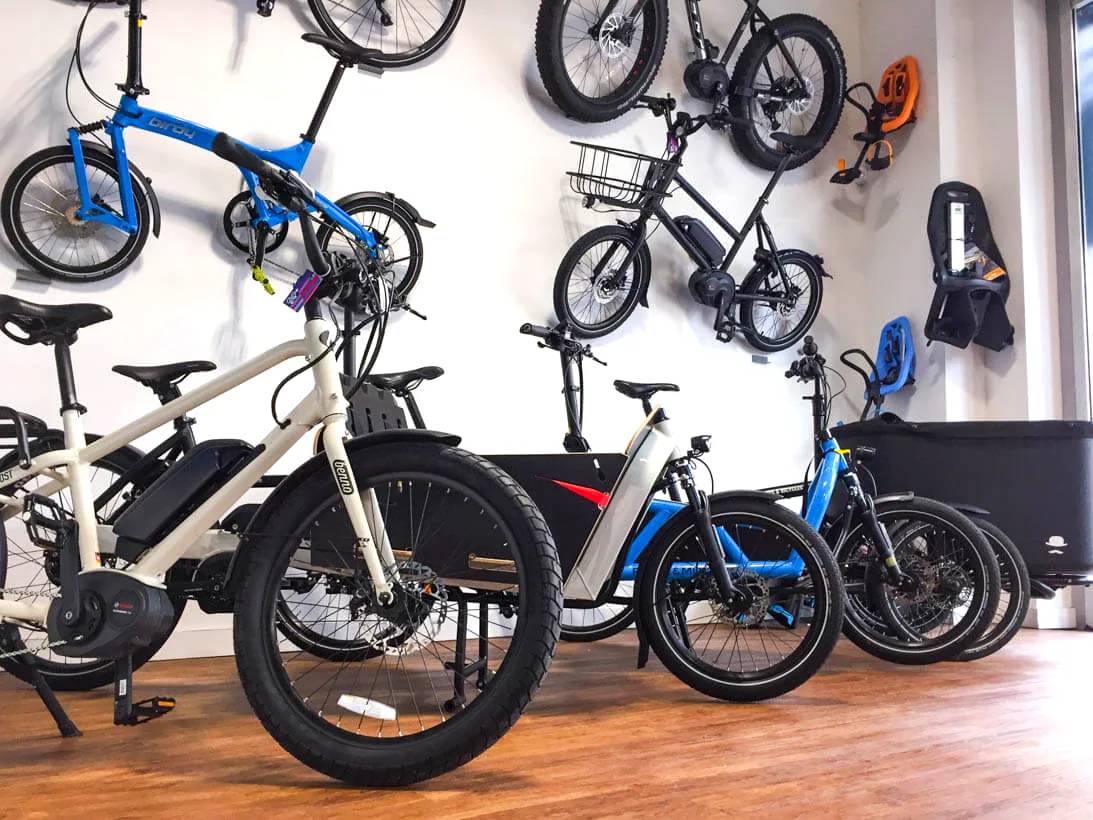
Somebody walks in for the first time nearly every day, and after fifteen years the first ten questions barely change. The answers do: the law caught up, batteries grew, and the prices are real numbers now. Here's the current version from the sales floor, updated July 2026. Prices move with the catalog, so the linked product pages are the source of truth.
1. Do I still have to pedal?
Yes, on nearly every bike we sell, and that's the point. A pedal-assist e-bike measures how hard and fast you're pedaling (a Bosch motor samples this over a thousand times per second) and multiplies your effort. It feels like your own legs on a good day, not like a scooter. Throttle bikes are Class 2. We carry a few, and we're careful about which ones. Here's how we think about Bosch, and here's how the motor reads your pedaling.
2. How far will it go on a charge?
Range is really a band rather than a single number. A Bosch 500 Wh battery on a commuter runs roughly 45–80 mi (72–129 km) depending on assist mode, hills, and load; Turbo instead of Eco cuts range in half or more. Cargo bikes with kids aboard sit at the low end. If you're riding 60-plus mi (97 km) days, dual-battery bikes carry 1,250 Wh and settle it.
Two things nobody mentions: cold weather temporarily shrinks range and it returns when the pack warms up (winter guide), and you charge from a normal wall outlet, on or off the bike. Bosch's standard 4A charger fills a 625 Wh battery from empty in about 4.5 hours.
3. How fast do they go?
Class 1 bikes assist up to 20 mph (32 km/h); some Bosch motors assist up to 28 mph (45 km/h), which is a motor cutoff, not a NY legal class (NY's statutory Class 3 requires throttle capability, caps at 25 mph, and only applies inside NYC). Either way, NYC caps e-bike operation at 15 mph citywide with no posted-sign exception, so in the city you ride at 15 mph regardless of the bike's cutoff. Past the cutoff the motor tapers off and you're just a bicycle. Money doesn't buy speed: the cheapest and most expensive bikes on our floor share the same legal ceiling. What the money actually buys is a different article.
4. Are they legal?
Yes, and in New York that's newer than most people realize. The state legalized Class 1, 2, and 3 e-bikes in April 2020; before that, every e-bike was technically illegal on NY streets, a holdover from a 2004 law. We know this one personally: in 2015 we were fined $25,000 for selling e-bikes in Brooklyn.
Since 2023 there's a second layer in NYC. Local Law 39 bars selling, leasing, or renting any e-bike in the city unless the whole system is certified to UL 2849, the fire-safety standard covering the battery, motor, charger, and controller together (the battery pack alone carries its own UL 2271). Every e-bike we sell today is certified to it, and we asked for that before the law required it. Details in our safety guide.
Hear the $25,000 version of the story from our founder:
5. Do I need to wear a helmet?
In New York, helmets are required statewide for riders under 14 and for anyone riding a 28 mph e-bike. We recommend one for everybody. On a bike with a 28 mph assist cutoff, look for a helmet certified to NTA-8776, the Dutch standard rated for 28 mph; a standard bicycle helmet is tested for about half that impact speed.
6. Do I need insurance?
Not legally, the way a car requires it. But you're buying a $3,000 to $15,000 vehicle that lives outdoors part of its life, so insuring it against theft and damage is worth it. The catch: many homeowners and renters policies exclude anything with a motor, so if your insurer says you're covered, get it in writing. We wrote up what we tell customers about e-bike insurance, including the specialty options.
7. What do they cost?
Our floor runs from entry city commuters to cargo bikes built to replace a car. Prices move with the catalog, so the current lineup lives on the shop pages. The shape holds: the middle tier is where most daily commuters land, the top tier is full car-replacement cargo. A belt drive and internal gear hub cost more up front and pay it back in maintenance you never do. The tier-by-tier breakdown is in what a $10,000 e-bike actually buys you, and financing spreads any of it out.
A $600 e-bike from the internet is also real, and so are the reasons it's $600: no certified battery system, no dealer, no parts pipeline when something breaks. That's why Local Law 39 exists.
8. What types are there?
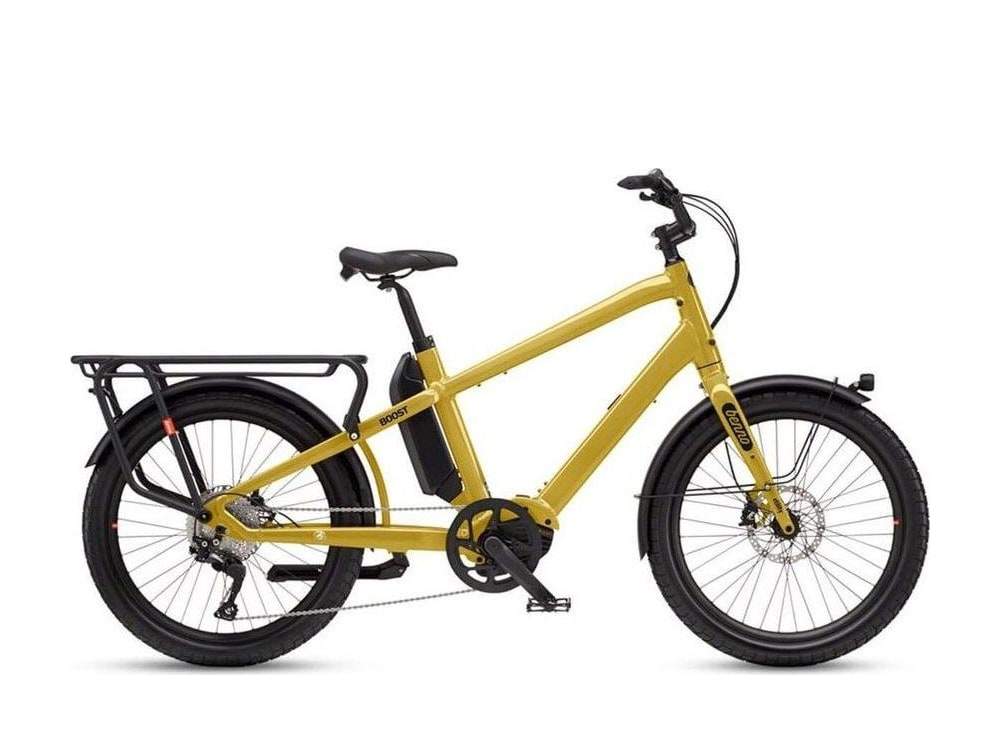
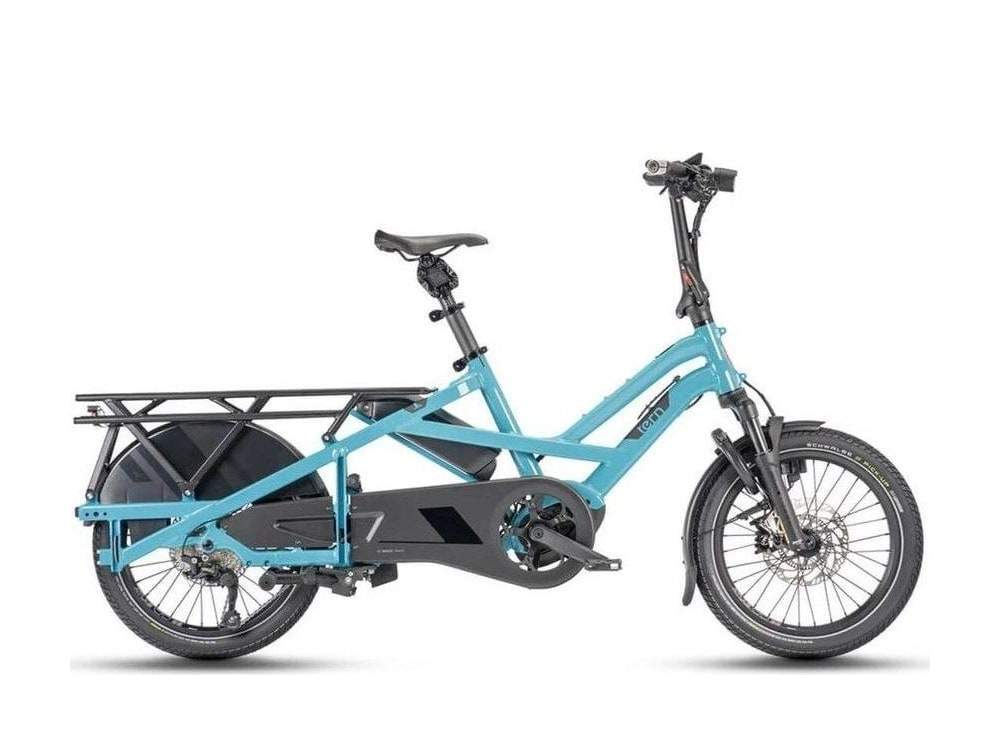
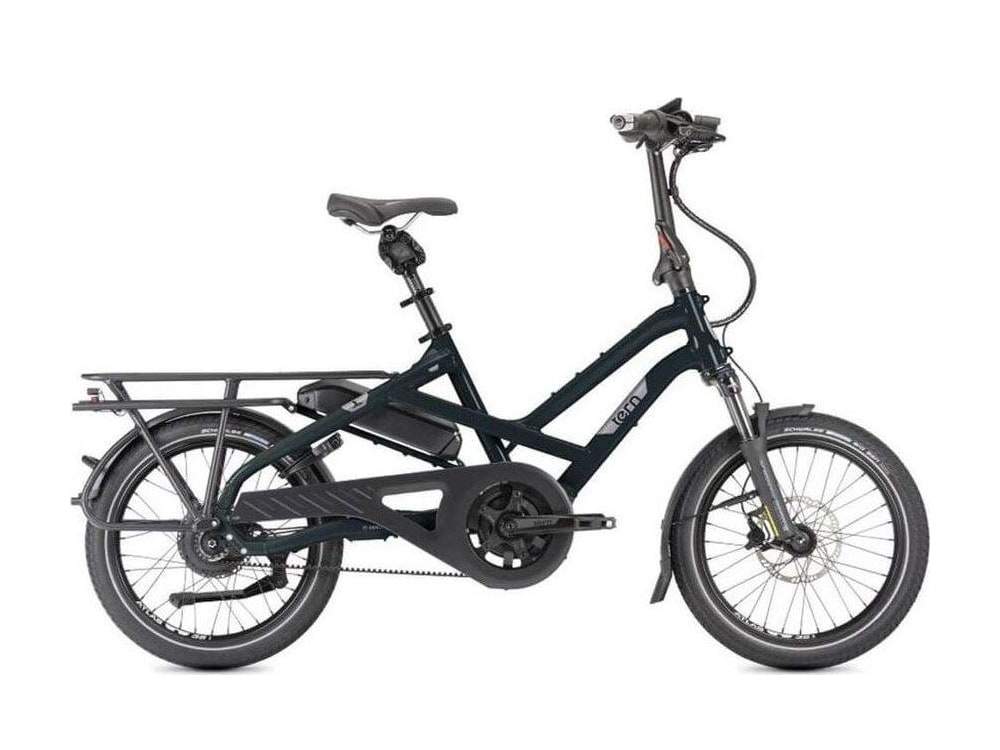
For city life, the catalog sorts into four families: commuters (the Gazelles, upright and fendered, ready for weather), compact cargo (the Tern HSD and Quick Haul, normal-bike footprint plus a kid seat or a week of groceries), longtails (the Tern GSD and Benno Boost, two kids on the back), and front-loaders (the Urban Arrow FamilyNext, kids in a box up front where you can talk to them). There are also folding and e-mountain bikes, but those four cover most of Brooklyn. Start with the cargo lineup if you're carrying anyone.
9. How heavy are they?
Heavier than you expect: mostly 55 to 80 lb (25 to 36 kg). Riding, you won't feel it, because the motor erases weight the moment you pedal. It matters everywhere that isn't riding: walk-up stairs, car racks (most trays are rated for less than an e-bike weighs; transport guide), and storage. So answer the storage question first: where will the bike live?
10. How much maintenance do they need?
The same categories as a regular bike, on a faster clock. Weight and speed wear brake pads and tires sooner, and motor torque stretches chains faster, which is why so many of our bikes use a Gates belt and internal gear hub instead: nothing to lube, nothing hanging off the wheel to bend. The motor is sealed and isn't a maintenance item; it occasionally wants a software update, which any Bosch-certified shop does, including ours. What service costs and when is in what service your e-bike actually needs, and our service department does all of it.
The eleventh question
It's always some version of "which one is right for me," and an article can't answer it. Ride two or three back to back and the bikes answer it themselves. Book a test ride at the Brooklyn shop, send the matchmaker your situation, or call 646-736-7716 and describe your commute. That conversation is the part of this job we like best.