Transporting an e-bike by car: rack criteria, real weights, honest limits
Most hitch racks are rated below what our bikes weigh. The five checks we run before recommending a rack, what we stock, and when the answer is a van.
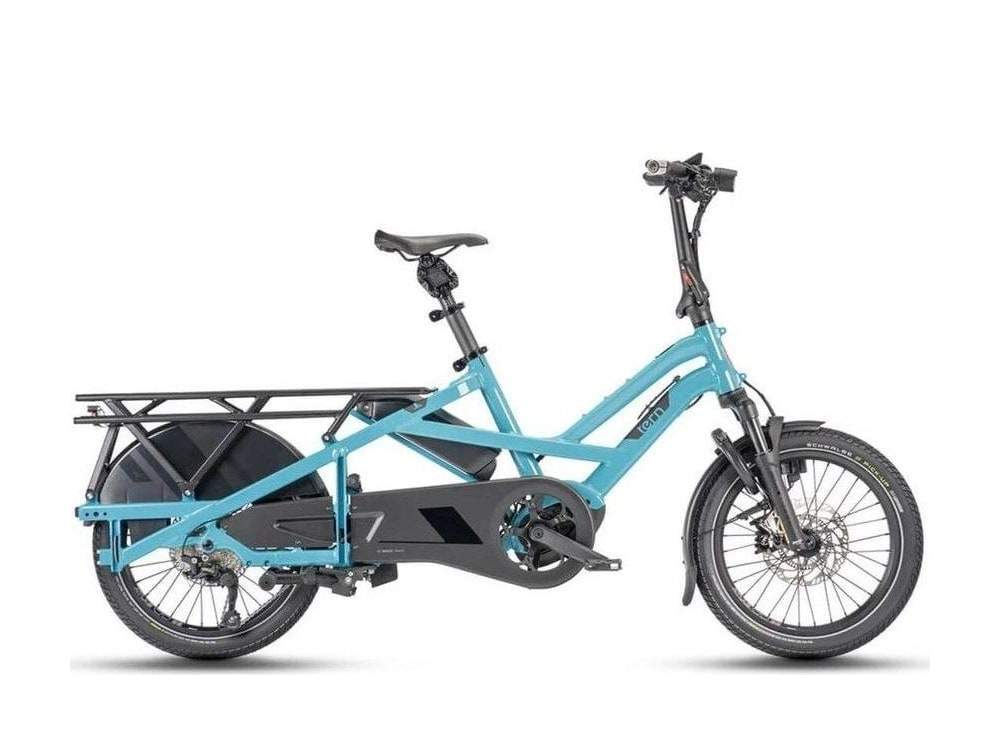
A Tern GSD once arrived for its service appointment folded into the back of a Honda Fit. Well-named car, as its owner pointed out. It makes the real point: transporting an e-bike is a weight problem first, and the solutions that work respect the number.
That number: the bikes we sell mostly weigh 55 to 80 lb (25 to 36 kg). Most bike racks, including expensive ones, are rated for 35 to 45 lb per tray. That mismatch is the most common transport mistake we see, and it fails at 65 mph. Here's the checklist we run at the counter before we bless any rack.
The five questions that disqualify most racks
- Is each tray rated for 60+ lb? The per-bike number, not the rack total. Pulling the battery drops 6 to 8 lb, but you still want the rating with margin.
- Is it low to the ground? You'll be dead-lifting this bike at a rest stop in the rain. The best racks solve it with a ramp instead of your back.
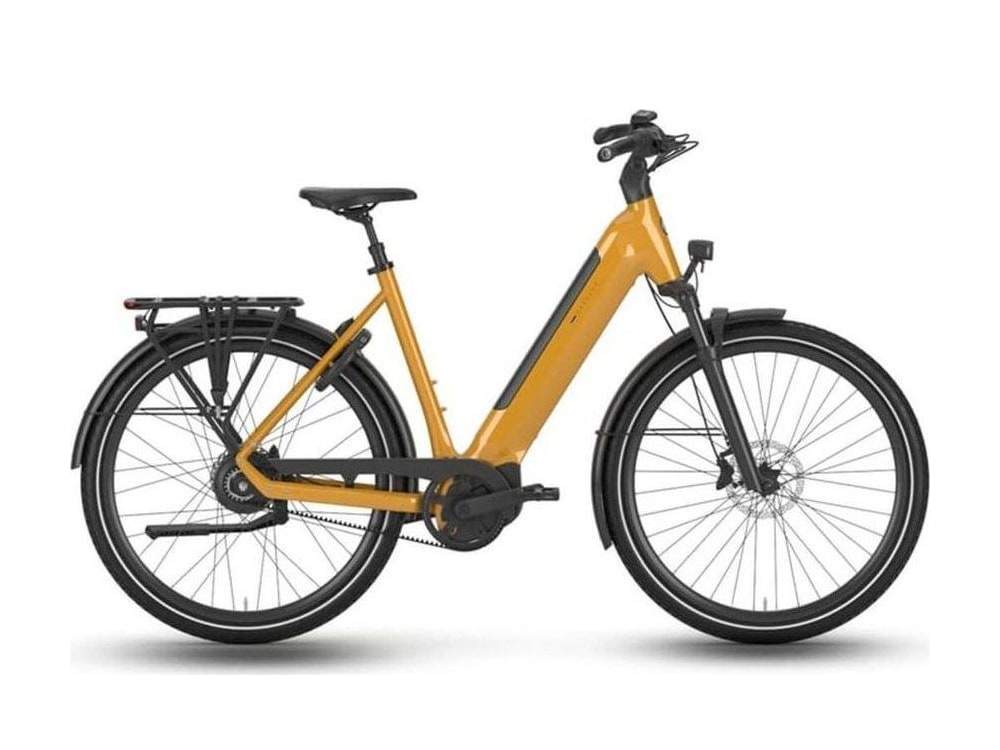
- Does it hold the bike by the wheels, in trays? Tray racks carry the weight the way the bike was built to, keep bikes apart from each other and the car, and hold the bike upright while you strap it. Hanging racks assume a crossbar, which step-thru bikes like the Gazelle Ultimate don't have.
- Does the clamp clear fenders and racks? Nearly everything we sell ships with full fenders and a rear rack. A rack that clamps the wheel or down tube works; one that grabs the top tube or rear triangle usually doesn't.
- Can the bikes lock to the rack? If the trip includes lunch, the bikes need to survive a parking lot. A built-in cable is the minimum; a real chain through the frames is better.
Hitch racks are the only style that reliably passes all five. The hitch ties into the vehicle's structure, carries the weight low, and takes bad pavement without levering against a trunk lid. Roof racks fail on lifting (an 80 lb bike overhead is a two-person emergency) and trunk-strap racks fail on weight.
What we actually stock and see working
- Thule Epos is the current e-bike-era Thule platform rack, built around exactly these criteria. We stock the 2-bike; the 3-bike runs around $1,400. That's real money, but it's worth it when the bikes it carries cost ten times that.
- Thule EasyFold XT is the long-running folding favorite: 65 lb trays, folds to a suitcase with caster wheels, and takes the add-on loading ramp ($100 to $120). Ramp plus the bike's walk-assist is the trick: hold the walk button and the bike drives itself up. Two cautions: confirm the ramp is clicked fully into the rack before trusting it, and add the license-plate holder if the outermost bike hides yours. That ticket is real.
- Küat's NV and Piston lines pass our criteria too and come through the shop on customer cars regularly. The Piston Pro X's pneumatic arms make one-person loading easier.
Whatever you choose, we can order it, and if you're local we'd rather fit it to your car and bikes than guess from a spec sheet.
Before the bike goes on the rack
- Pull the battery and carry it in the car. Lighter lift, less bounce on the contacts, and it stays climate-controlled, which it prefers.
- Cover the exposed contacts. Bosch makes rubber contact-pin covers for about $3, made for exactly the road spray of a long drive. Ask us and we'll drop a couple in the mail.
- R&M owners with internal batteries: transport covers exist for your frame opening; we can get them.
- Pocket the display if it detaches (Kiox 300 owners, that's you). Theft or damage in transit is one of the scenarios bicycle insurers cover that homeowners policies often don't; see our insurance guide.
- A bike cover keeps off weather and eyes and adds a small theft deterrent when parked. It also adds drag, so do one short shakedown drive before the highway.
Cargo bikes mostly don't do racks
A GSD can travel by car: fold the bars and drop it on a heavy-duty tray rack rated for it. A front-loader cannot. An Urban Arrow FamilyNext is over 8 ft long and around 112 lb; no hitch rack exists for that, and we won't sell you one. What works, from customers who've done it: a rented cargo van with two wheel chocks, a U-Haul motorcycle trailer, or professional bike freight for relocations. Moving out of the region? Talk to us; we help arrange shipping for heavy bikes more often than you'd guess.
And if the whole point is just getting the bike to the shop for service, you might not need the car at all. Ride it in, we'll service it while you wait, and the only equipment involved is the bike lane on Flushing Avenue.