Riding through a New York winter: what your bike needs, not just what you wear
Cold kills range, salt kills drivetrains, and ice needs studs. A Brooklyn shop's plain guide to riding all winter: batteries, belts, tires, lights, and kids in the box.
Every year the first hard cold snap brings the same email: should I put the bike away for the winter? And every March the same bikes come back with a drivetrain seized orange with rust, ridden through salt season and never rinsed.
Fifteen Brooklyn winters have taught us that weather almost never stops a commute, but neglect does. Winter riding really comes down to three things, the battery, the drivetrain, and traction, and all three have straightforward answers. Get those right and the cold is just cold.
The battery is the part that actually cares about the cold
Lithium-ion chemistry slows down when it's freezing. A Bosch battery that shows 60 miles on a mild October day shows noticeably less on a 20°F morning. Here's the important part: the range comes back when the pack warms up. That's temporary, and it isn't damage or early wear. You manage it with three habits:
- Charge indoors, at room temperature. Bosch specs its batteries to charge between 32°F and 104°F. Let a pack from a cold hallway warm up before it goes on the charger; never charge a frozen battery.
- Bring the battery inside. If the bike lives outside or in an unheated garage, pop the battery off and store it at room temperature. Click it back on right before you leave so the ride starts warm.
- Plan for less range. Drop into a lower assist mode and top up more often. Long-term the cold costs you nothing, as long as you don't charge it frozen.
That's the whole battery story, the one part of the bike where the cold itself is the enemy. For everything else, the enemy is what the city puts on the road.
Salt is what kills bikes, not snow
New York doesn't get Minnesota winters, but it gets Minnesota road treatment: brine before the storm, rock salt during, and a gray crust on every street for days after. Salt is corrosive and goes straight for the steel in your drivetrain: chain, cassette, derailleur, cables. A bike ridden through a salty February and parked wet grinds itself into an expensive tune-up by spring.
On a chain-drive bike, the rule is simple: rinse the drivetrain after salty rides, and keep it lubed. Not a full wash every time, just enough to move the salt off the metal before it sits overnight. Ten seconds with a hose or a wet rag saves a chain.
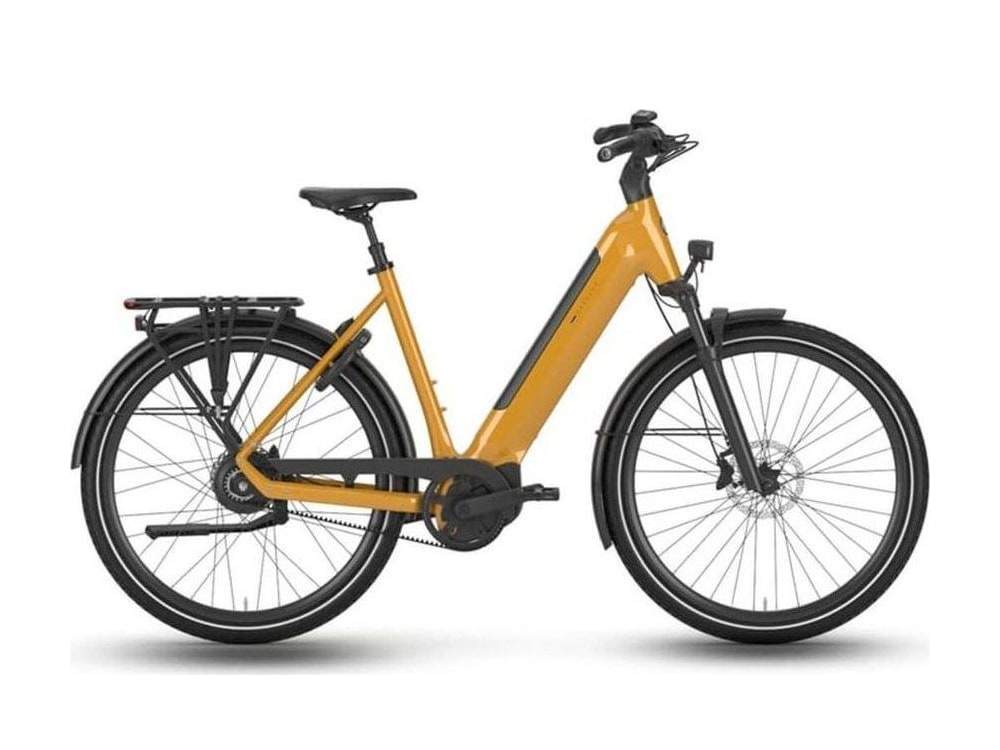
The bikes that don't care are the belt-drive ones. A Gates carbon belt and its stainless sprockets don't rust, and the gears live sealed and oil-bathed inside an internal gear hub, away from the spray. A Gazelle Ultimate C380 or any belt-and-hub commuter is the lowest-worry winter bike we sell: rinse the grime off and you're done. It's the most underrated reason city riders end up on belt drive, and nobody mentions it in the showroom in July.
Ice needs studded tires
Most winter riding in the city is just cold pavement, and normal tires handle it fine. The exception is ice: black ice at intersections, refrozen slush in the bike lane, the shaded stretch that never thaws. On ice, no amount of care helps, because rubber can't grip frozen water.
There's one real answer: studded winter tires. We stock the Schwalbe Marathon Winter Plus, a puncture-resistant commuter tire with roughly 240 tiny steel studs set into the tread that bite into ice. On bare pavement they roll with a faint hum; on ice they're the difference between riding and walking. If your commute has a bridge, a shaded hill, or an intersection that ices over, a set is worth every dollar. If you only ride the occasional clear day, you don't need them. Ask us and we'll tell you which camp you're in.
One free trick for cold-but-not-icy conditions: drop your tire pressure a few psi. A slightly softer tire puts more rubber on the road and grips better on cold pavement.
Being seen matters more in December than in June
The real winter hazard in the city is that it's dark by 4:30 and drivers aren't looking for a bike. Two things fix most of it:
- Lights, front and rear, every ride. Many of the bikes we sell run integrated lights off the main battery, so there's nothing to charge or forget. If yours doesn't, a bright rechargeable set is the cheapest safety upgrade you can buy.
- Fenders. A rear fender keeps a stripe of cold, salty water off your back; a front fender keeps your feet dry. A cold, soaked rider makes bad decisions.
And your brakes: nearly every bike we sell runs hydraulic disc brakes, exactly what you want in the wet. They don't fade in the rain the way old rim brakes did; the stopping power is there whether the rim is dry or soaked.
Kids in the box: the box is doing you a favor
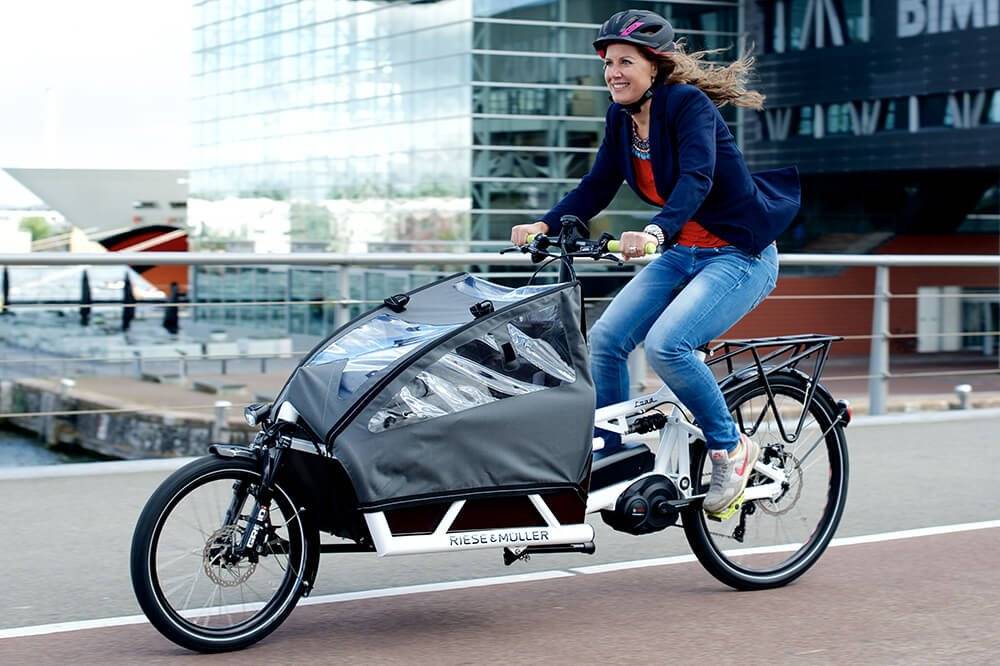
Carrying kids doesn't stop in winter, and the cargo bike makes it easier, not harder. A child sitting down in a front-loader box or a longtail seat is out of the wind you're pushing through, more sheltered than they'd be walking. Add three things:
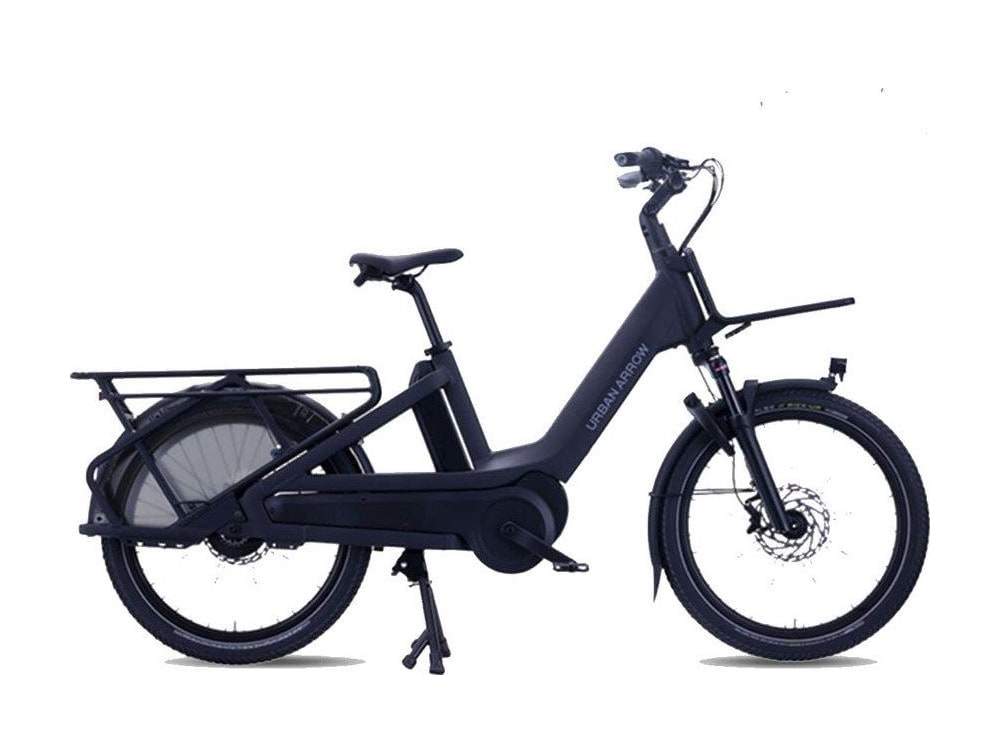
- A rain cover or canopy. Urban Arrow and the other cargo brands make covers built for their boxes and seats (R&M owners: covers for your box remain in our parts catalog). They turn the passenger compartment into a dry, wind-blocked bubble, and this is the accessory that makes winter kid-hauling pleasant.
- A blanket and warm layers, since a passenger generates none of the heat you do pedaling. Dress them warmer than you dress yourself.
- Check on them. Kids don't always say they're cold. Glance back, or reach a hand into the box at a red light.
And the two hot months
Brooklyn summers are short but real. The July version is easier: carry more water than you think you need, wear sunscreen on a long ride, and ease off on the worst heat-advisory days, since the breeze from riding cools you until it doesn't. Kids in the box need shade and water most, the same canopy doing a different job.
The one thing to do before winter
Bring the bike in for a pre-winter check. We'll dial the brakes, get the tires right for how you ride, check the lights, and on a chain bike, clean the drivetrain for salt season. It's a small service that heads off the expensive March one. Book it here, or if you're not sure your bike is set up for a real winter commute, come talk to us. We ride through it too.
Curious which bikes shrug off winter with the least fuss? Start with belt drives and internal gear hubs, or see the cargo lineup.