What service does your e-bike actually need, and what it costs
The maintenance schedule from our own service team, with real Propel prices. Why e-bikes eat drivetrains and brakes faster, and the five-minute checks that prevent the expensive repairs.
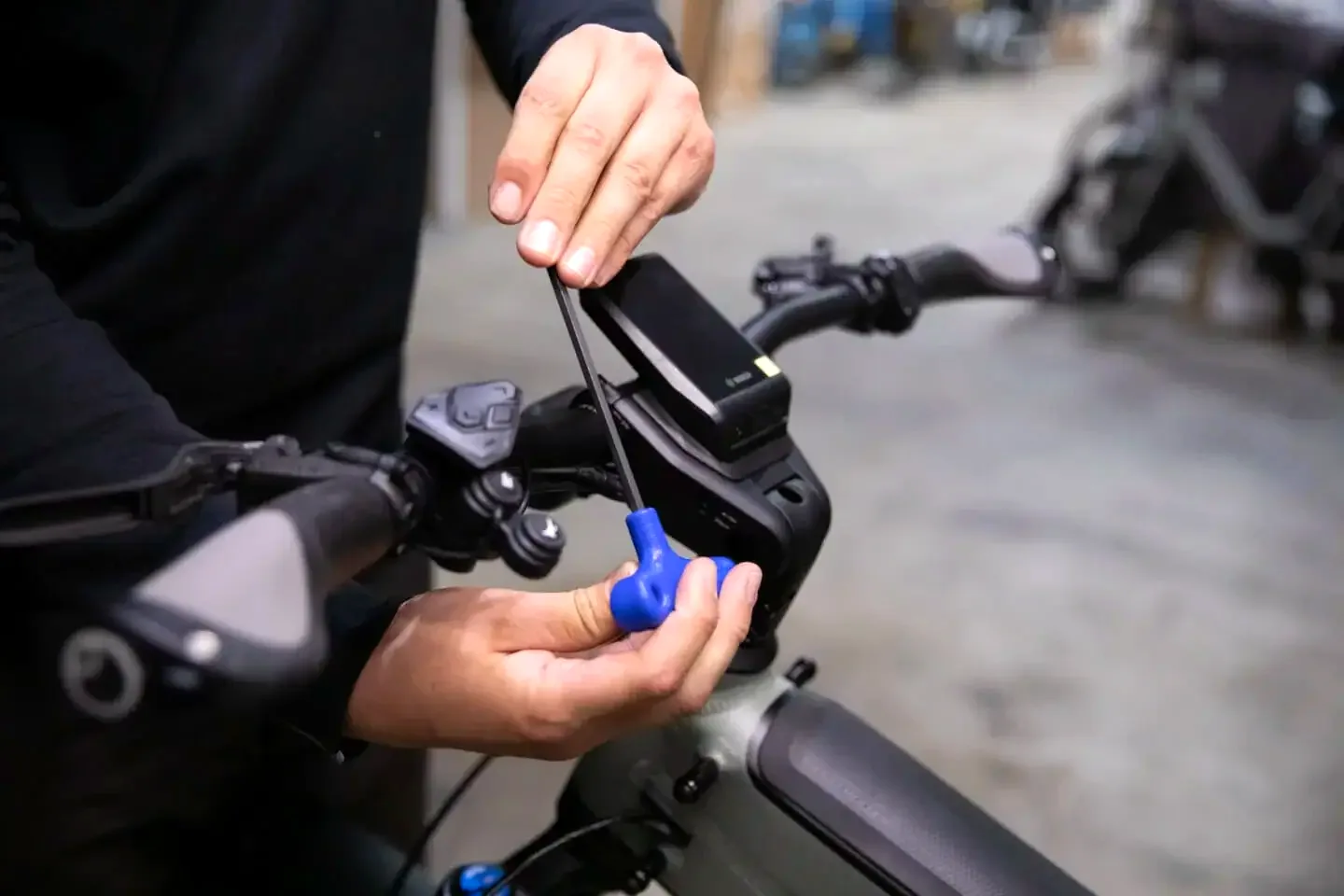
The most expensive repair we do is the one a customer could have prevented for the price of a chain. A stretched chain ridden too long chews the cassette to match it, and now an $85 chain replacement is a $230 chain-and-cassette job. On an e-bike this happens faster than people expect, and the motor is the reason.
The motor puts steady torque through the drivetrain, and the bike carries more weight at a higher average speed, so the parts that wear on any bike wear faster on yours. Below is the maintenance that matters, on the schedule our mechanics use, with what each job costs on our service menu so you know before you come in.
The five-minute checks that prevent the expensive jobs
Do these yourself; they're the difference between a tune-up and a repair.
- Tire pressure, weekly. Printed range on the sidewall. Underinflated tires pinch-flat and wear square; run toward the high end if you're heavy or loaded. This is also, per our suspension piece, your cheapest ride-comfort dial.
- Chain lube, roughly monthly. A dry chain gets loud, and that noise is it grinding down your cassette. A $10 bottle of chain-specific lube protects a drivetrain worth hundreds. Wipe, then lube, then wipe again.
- The lift-and-spin. Once a month, lift each wheel and spin it: listen for brake rub, watch for a wobble (a wheel out of true), squeeze the brake levers for a firm bite. Any of the three means book a visit before it gets worse.
- Bolt check. E-bike vibration walks bolts loose. If you hear a new rattle, or a motor-mount clunk, don't ride it out; that specific sound is worth a same-week appointment.
The service schedule, by interval
Every year (or ~2,000 miles): a tune-up. This is the anchor service and the one that catches everything above before it's a repair. Our standard tune-up is $189 (full inspection, brake adjust, derailleur tune, chain and cassette wear check, wheel true, torque check, and a motor firmware update). Cargo bikes get their own $239 version that adds a loaded brake test and child-seat torque verification, because a bike carrying kids has a different failure budget. The premium tune ($329) adds a full drivetrain clean and a hydraulic brake bleed front and rear.
When the chain wear gauge says so: chain, before cassette. We check chain stretch at every tune-up for the reason this piece opened with. Caught in time it's an $85 chain. Caught late it's a $145 cassette on top. If your bike runs a Gates carbon belt instead, good news: belts don't stretch. They just have a long wear life (Gates rates them roughly 10,000 to 30,000 miles depending on torque and alignment), and a belt replacement runs $195 when the day finally comes.
Brakes: pads sooner than you think. E-bike weight and speed eat brake pads faster than an acoustic bike, and worn pads that go ignored score the rotor, turning a $45-per-wheel pad job into a rotor replacement too. Hydraulic systems also want an occasional bleed ($75 per wheel) to keep the lever firm.
Internal-hub bikes have their own clock. A Rohloff hub takes a scheduled oil change (we do it for $85, kit and tooling in-house); an enviolo CVT wants a periodic inspection and cable adjust ($95). These are cheap, easy, and the reason internal-hub drivetrains outlast derailleurs by years. Skipping them is the one way to turn a low-maintenance hub into an expensive one.
The battery: the part you maintain by not abusing it
The battery has almost no serviceable parts, so care is mostly habits, and good habits are the whole game on one of the most expensive parts on the bike to replace:
- Store it between 30 and 70 percent if the bike's sitting for weeks (a long winter, a trip). A battery stored full or empty ages faster.
- Keep it out of extremes. Charge and store indoors; a battery cooked in a hot trunk or frozen on a porch loses capacity permanently.
- Charge indoors, on the certified charger it came with. Every e-bike we sell is UL 2849 certified for exactly this (see our safety guide); don't undercut that with a mismatched charger.
When you want to actually know where your battery stands, we run a Bosch battery health check for $45: capacity test, cell-balance, and charge-cycle history, which tells you real remaining life instead of a guess. Paired with the $95 Bosch motor diagnostic, it's how we answer "is this bike worth putting money into?", and sometimes the answer is no.
The Propel-specific parts
Two things we push because we watch them play out in the shop:
- Tannus tire liners. We install them constantly, because a flat on a 70 lb loaded cargo bike on the Manhattan Bridge is a genuinely bad afternoon, and a liner turns most glass and staple punctures into a non-event.
- Buy the bike from a shop that services it. Every bike we sell ships fully assembled, tuned, and road-tested, and the tune-up relationship is the point. If you bought elsewhere we'll still service it (and do box-to-road assembly from $295), but the bikes that stay healthiest longest are the ones that come back once a year.
That's the whole schedule: five minutes a week from you, once a year from us. Book a tune-up, or if something's making a noise you don't recognize, describe it to us. After fifteen years and thousands of Bosch bikes, we can usually name it from the sound.