How to use the gears on your e-bike (and why the Bosch motor cares)
On a Bosch e-bike the gear you pick isn't just about effort, it's how the motor decides to help. A plain guide to shifting well, from a shop that fits them daily.
On a regular bike, the gears are about your legs. On a Bosch e-bike, they're also about the motor, and that changes how you should shift. Get it right and the assist feels like someone put a hand on your back. Get it wrong and the same bike feels sluggish and confused. Here's the whole thing in a few minutes.
The "right gear" is a pedaling feel, not a number
Forget gear numbers for a second. The right gear is the one where you're pushing the pedals with a comfortable, steady effort (not straining, not spinning uselessly fast) at a rhythm you could hold for a while. Riders and mechanics call that rhythm your cadence, the number of times the pedals go around per minute. A cadence that feels good to most people sits around 60–80 rpm, and some Bosch displays will show you the number if you want to watch it.
You already know the feel from walking: on the flat you stroll, uphill you shorten your steps and push harder, downhill you lengthen out. Gears let you keep that same comfortable push whether the street tilts up or down. Shift to an easier gear before a hill so you can keep spinning; shift to a harder one when the road flattens or drops so you're not pedaling air.
Why the motor cares what gear you're in
This is the part that's specific to a pedal-assist e-bike, and it's the reason a good shift habit matters more than it did on your old bike.
A Bosch motor doesn't push on a schedule. It reads how hard you are pedaling (your force and your cadence) and multiplies it. So the gear you choose is literally the input the motor is responding to:
- Too easy a gear (you're spinning fast against no resistance) gives the motor almost nothing to amplify. You get a burst and then a shrug.
- Too hard a gear (you're grinding slowly, standing on the pedals) starves the cadence signal, and the assist feels heavy and reluctant.
- The right gear, comfortable steady pressure, is where the motor has a clear, strong signal to work with, and the assist comes on smooth and generous. That "superpowered legs" feeling everyone talks about lives here.
One habit does matter for the bike's health: ease off the pedals for the instant you shift. Slamming a shift while you're standing on the pedals under full load drags the chain across the gears under strain, which over time skips or wears the chain and cogs, and on a derailleur bike can bend the derailleur or its hanger. Let the pressure off for half a pedal stroke, shift, then push again. Do that and the drivetrain shrugs off the rest, so the real cost of sloppy shifting is rarely damage. It's leaving the good part of the bike on the table.
Where the controls live
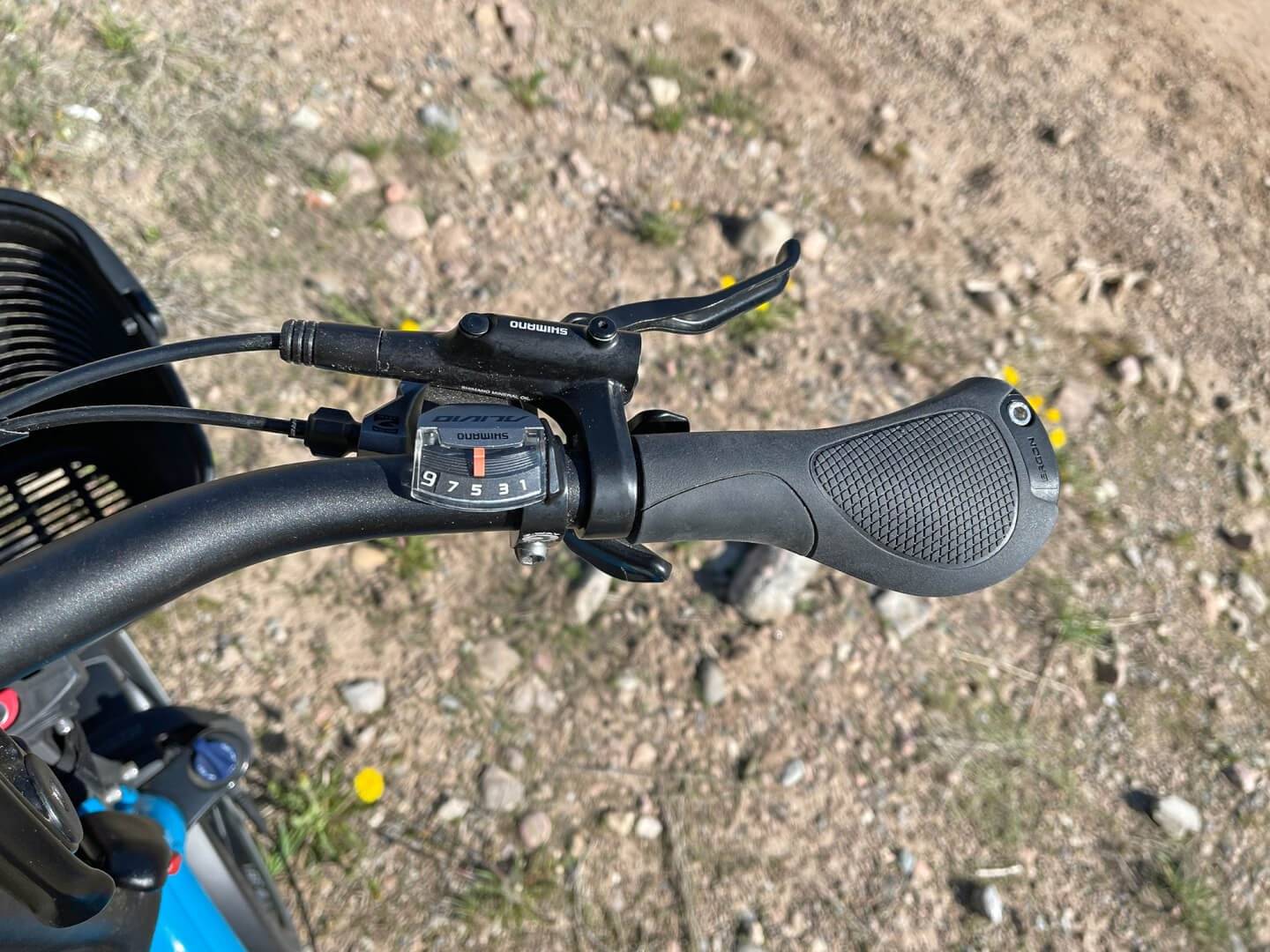
Two different systems, two hands. Your right hand works the gears, same as any geared bike. Your left hand sets the level of electric assist (Eco, Tour, Sport/eMTB, Turbo on most Bosch systems). They're independent: think of the left as how much help, and the right as setting the motor and your legs up to use that help well. New riders sometimes reach for more assist when what they actually needed was an easier gear.
The upgrade that deletes the whole question
Shifting well is a skill, and plenty of people would rather not think about it. That's exactly what an internal gear hub solves. On a hub-geared bike you can shift while stopped: roll up to a red light in the wrong gear, click down to an easy one while standing still, and pull away smooth every time, so there's no mistimed shift and no lurch. The enviolo hub goes further and has no fixed gears at all, so you just twist to the resistance you want, and its Automatiq version will even hold your chosen cadence automatically, like cruise control for your legs.
If shifting has always been the fiddly part of riding for you, that's the fix, and it's a big reason our commuter and cargo floor has quietly filled up with hub-geared bikes. We wrote the full plain-English breakdown of belts, hubs, and derailleurs here: **belt drives, gearboxes, and why your next e-bike might not have a derailleur.**
Want to feel the difference between shifting a derailleur and shifting a hub at a red light? Book a test ride and we'll put you on both on the same block.