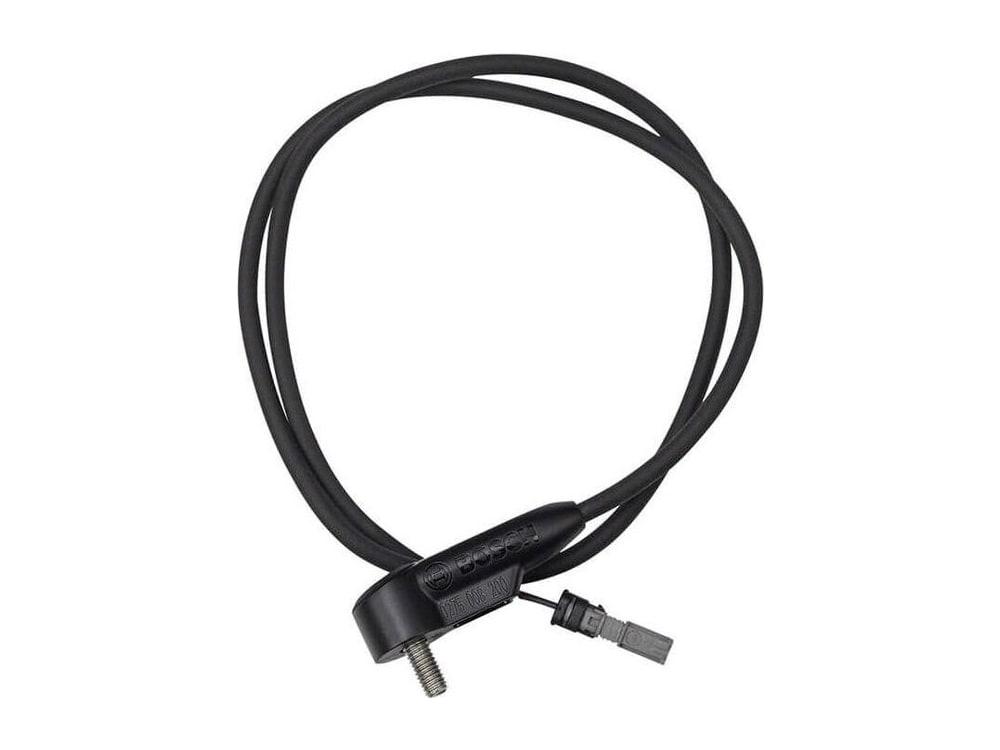
Bosch Speed Sensor
The Bosch speed sensor reads a rear-wheel spoke magnet so the drive unit knows your speed and can taper assist at the legal cap. It's the small black sensor that bolts near the rear dropout with a cable running up to the motor, plus the matching spoke magnet that triggers it.
$30
$38On sale · save 21%On the shelf now.
Why the Speed Sensor?
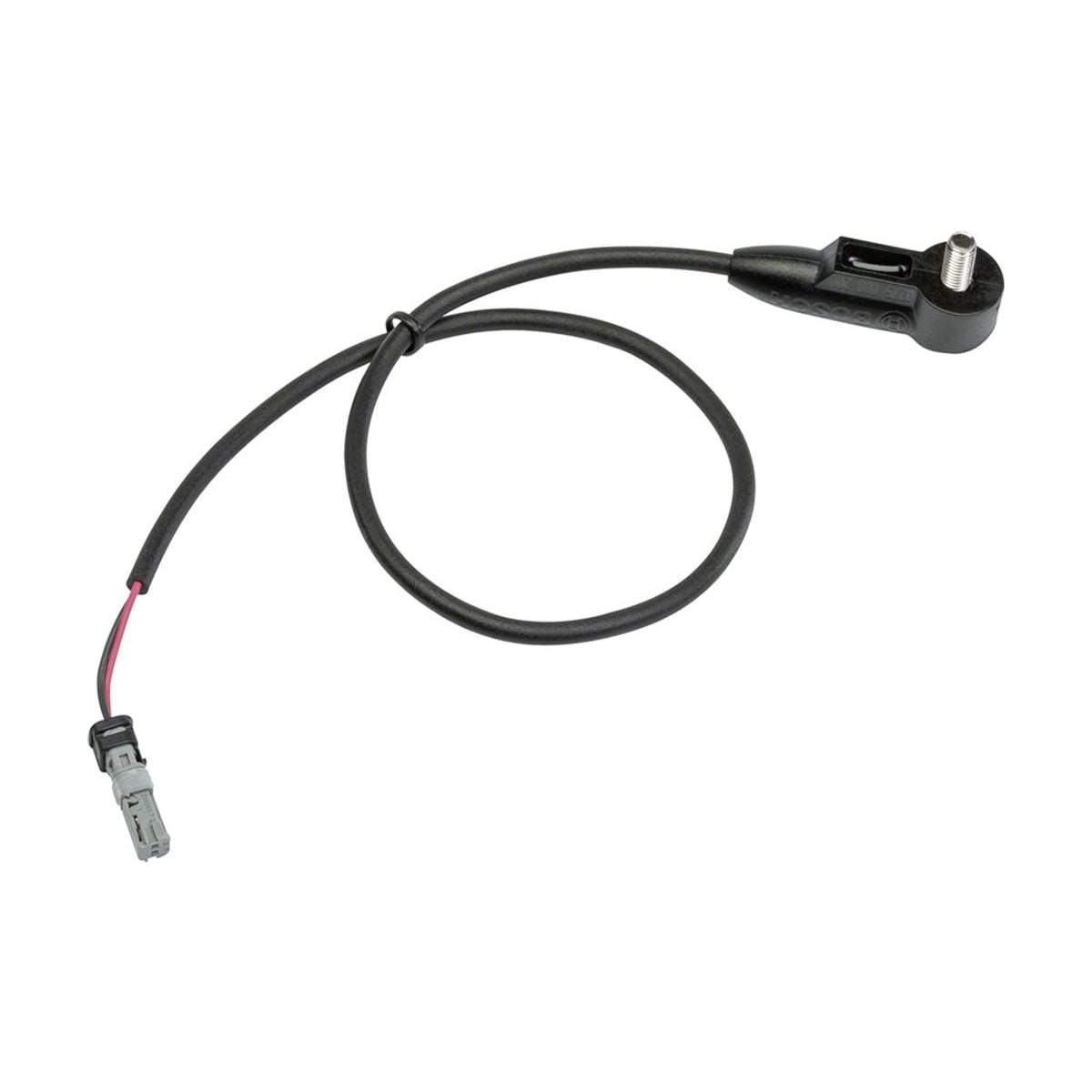
It is how the motor knows your speed
The sensor counts a spoke magnet passing it once per wheel revolution and reports speed to the drive unit. That signal is what tells the motor to ease assist as you approach the legal cap, 20 mph on a Class 1 bike, 28 mph on a 28 mph bike. No valid signal, no assist.
The usual failure
A speed-sensor fault on the display almost always traces to this part: the sensor knocked out of alignment, the magnet missing or too far away, a cut or pinched cable, or a corroded connector. Swapping the sensor and resetting the magnet air gap clears it.
Match the generation
Read your bike before ordering. The original eBike System 2 sensor and the Smart System "Slim" sensor are physically different parts and are not interchangeable. Smart System bikes run the eBike Flow app; eBike System 2 bikes run Purion, Intuvia, or the original Kiox.
Specs
- Part
- Rear-wheel speed sensor with cable and connector
- Reads
- Spoke-mounted magnet on the rear wheel
- Function
- Sends wheel-speed signal to the drive unit for assist cutoff
- Connector
- Bosch plug to the drive unit (keyed)
- eBike System 2 (bes2)
- 415, 600, 615, 815, 1230, 1610 mm
- Smart System Slim (bes3)
- 415, 615, 815, 1230, 1610 mm
- How to choose
- Match the original cable run for your frame; longer frames and cargo bikes use longer cables
- Spoke magnet air gap
- 2–15 mm clearance past the sensor
- Spoke magnet
- Required for operation; replace alongside a new sensor
- Mounting system
- Bolts at the rear dropout / chainstay
- eBike System 2 sensor
- Active Line, Active Line Plus, Performance Line, Performance Line CX (BDU2XX / BDU3XX)
- Smart System sensor
- Smart System bikes, 2022 and newer (Active, Performance, Performance CX, Cargo Line)
- Cross-generation
- A BES2 sensor will not run on a Smart System bike and vice versa
Specs come from the maker and can change. If one of these numbers matters to you, ask us and we’ll check the exact item.
Before you order the part
Smart System and the prior generation do not interchange. Our Bosch reference is the same set of pages our service team works from.
Questions about the Speed Sensor.
Don’t see yours? Ask the team directly.
Which speed sensor does my bike take?
It depends on your Bosch generation. If your bike runs the eBike Flow app with a Purion 200, Kiox 300/500, or System Controller, it is a Smart System bike and takes the Slim sensor. If it runs Purion, Intuvia, or the original Kiox, it is eBike System 2 and takes the standard sensor. The two are not interchangeable, send us your bike model if you are unsure.
What cable length do I need?
The cable runs from the rear dropout up to the drive unit, so the length depends on your frame. Cargo and long-tail bikes typically use 1230 mm or 1610 mm; compact and standard frames use 415–815 mm. The simplest method is to match the length of the sensor you are replacing.
Getting the right fit.
Fit-checked before you order
Tell us the bike you ride; we’ll confirm the accessory works with your specific frame, motor, and mounting points before it ships.
Clear about what is in stock
What is on our shelves is ready to pick up or ship. If something needs to be ordered, we tell you up front, not after you pay.
Help with the install
Shop install, walk-in service, or a remote walkthrough, whatever it takes to get the accessory working on your bike.