The Bosch eBike systems guide: motors, batteries, displays explained
A plain-English guide to Bosch eBike systems. Which motor to choose, what the battery options actually mean, which display you want on the handlebar.
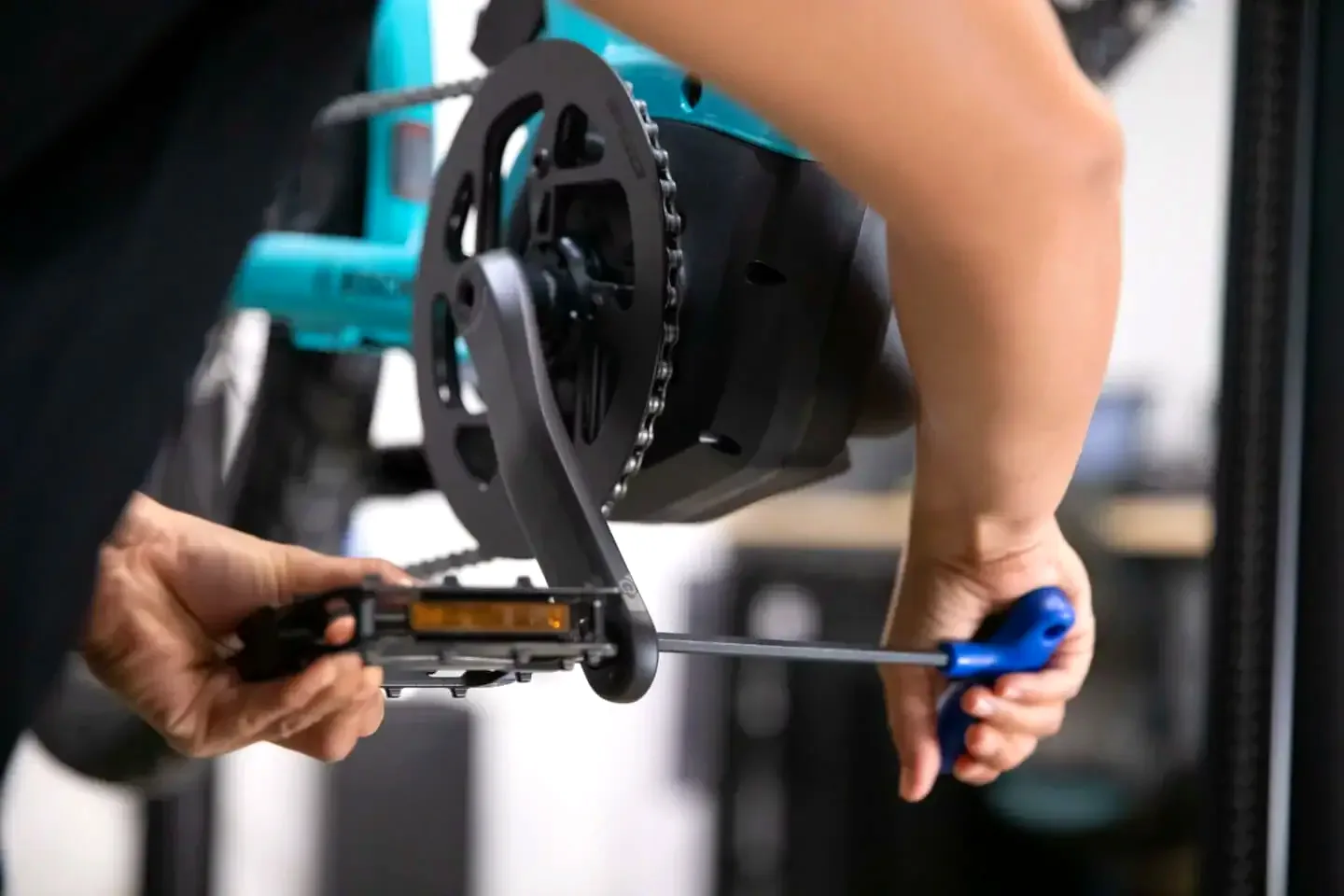
A lot of the eBikes you'll look at run a Bosch motor, and there's a reason for that. Bosch has spent more than a decade refining the platform, the parts pipeline is real (we still service bikes we sold in 2013), and the certified-service network means a Bosch bike isn't orphaned when something goes wrong. That's why we sell mostly Bosch-powered bikes.
But Bosch is really a set of motors, batteries, and displays, and once you've settled on a category, picking the right combination is most of the buying decision. This guide walks you through the lineup and how to choose.
The motors
Bosch sells five main motor lines. The differences are real but come down to three things: how much torque, what top assist speed, and what kind of riding it's tuned for.
Active Line: relaxed city rides
The lightest, quietest Bosch motor, tuned for flat to gently rolling streets. You feel the assist as a steady push, not a launch.
- 40 Nm torque
- 20 mph assist (Class 1)
- Best for: Dutch-pattern commuters, comfort cruisers, riders who want the bike to feel like a bike.
Active Line Plus: Active Line with a kick
Same DNA, more punch when you ask for it. Better on small hills.
- 50 Nm torque
- 20 mph assist
- Best for: light commuters in mostly-flat cities who want more responsiveness without going full Performance Line.
Bosch Active Line Plus reference →
Performance Line: the workhorse commuter motor
The middle of the lineup and the most common motor on the bikes we sell. Strong enough for daily hill commuting, smooth enough for new riders.
- 75 Nm torque
- 20 mph assist cutoff (Class 1) or a 28 mph assist cutoff (Performance Line Speed)
- Best for: most commuters and cruisers, anyone whose ride includes real hills but not full cargo loads.
Bosch Performance Line reference →
Performance Line CX: the cargo + off-road motor
The strongest stock motor in the lineup. More torque, better heat management, and eMTB mode that ramps assist based on how hard you push. This is the motor under most full-cargo bikes and the mountain-leaning eBikes.
- 85 Nm torque
- 20 mph assist
- Best for: loaded cargo bikes, family duty, hilly commutes, gravel and trail eBikes.
Bosch Performance Line CX reference →
Cargo Line: purpose-built for haulers
A Performance Line CX variant tuned for cargo. Same 85 Nm peak torque, optimized for low-cadence, high-load riding (think 100 lbs of kids and groceries up Flatbush Avenue). Slightly heavier, more durable.
- 85 Nm torque
- 20 mph assist
- Best for: front-loader cargo bikes and heavy longtails, anywhere you're carrying a real load.
Quick comparison
| Motor | Torque | Speed | Tuned for |
|---|---|---|---|
| Active Line | 40 Nm | 20 mph | Flat city rides |
| Active Line Plus | 50 Nm | 20 mph | Light commuting |
| Performance Line | 75 Nm | 20 or 28 mph | Everyday commuting + hills |
| Performance Line CX | 85 Nm | 20 mph | Cargo, mountain, hard duty |
| Cargo Line | 85 Nm | 20 mph | Heavy cargo, low-cadence work |
The batteries
Bosch uses two main battery housings, each with a few capacity options.
PowerPack: external batteries
Mounted on the outside of the frame (rear rack, downtube, or seat tube). Easy to remove and charge inside without dragging the whole bike up. Most common on cargo bikes and older commuters.
Capacities: 400 Wh and 500 Wh (rack-mounted); 400 Wh, 545 Wh, 725 Wh, and 800 Wh (frame-mounted).
PowerTube: integrated batteries
Lives inside the frame's downtube. Cleaner look, lower center of gravity, more weather protection. Most newer commuter bikes ship with PowerTube.
Capacities: 500 Wh, 540 Wh, 600 Wh, 625 Wh, 750 Wh, and 800 Wh (Smart System); 400 Wh, 500 Wh, and 625 Wh on earlier eBike System 2 bikes.
Range translated to real riding
Marketing range numbers are rosy. Real range depends on motor mode, terrain, rider weight, cargo, headwind, tire pressure, and temperature. Rough rule of thumb for the most common pairing (Performance Line CX, 500 Wh battery, mixed terrain, average rider):
- Eco mode: 50-70 miles
- Tour mode: 35-50 miles
- Sport / eMTB: 25-35 miles
- Turbo: 20-25 miles
Cargo bikes loaded with kids cut these numbers hard. A 500 Wh battery on a loaded Urban Arrow does more like 20 miles in Tour mode. For a number tuned to your motor, battery, terrain, and load, run the Bosch range calculator.
Dual battery setups
Many R&M and Tern cargo bikes support a second battery. Range roughly doubles, weight goes up 6-8 lbs. Worth it if:
- You ride more than 25 miles a day with load.
- You want zero range anxiety on long rides.
- You're routing a multi-stop Saturday and don't want to plan around charge stops.
Dual-battery eBikes and upgrades →
How long do batteries last? Plus care tips →
The displays
The handlebar display is the cockpit. Bosch has a half-dozen options, from minimalist to full-color.
Purion: minimalist
Small monochrome screen on the left grip. Mode, speed, battery, range, nothing more. The bike looks cleaner.
Intuvia: classic readout
Center-mounted monochrome screen with a separate control pad on the grip. The default Bosch display for years. Detachable, easy to read.
Kiox / Kiox 300: color screen, sport-oriented
Color screen, more data at a glance, USB charging port on some models. Detachable.
Nyon: full smartphone-like
Large color screen, GPS-capable on the new Smart System version, full mapping. Heavier display, higher price.
SmartphoneHub: use your phone
A mount that turns your phone into the display via the Bosch eBike Flow app. Light, flexible, and the app keeps getting updates.
LED Remote: Smart System minimalist
Tiny LED bar on the grip. The most minimal cockpit, paired with your phone via Smart System for any data you need.
Smart System vs. the legacy system
In 2022 Bosch launched Smart System, a re-architected platform with cloud connectivity, app-based controls, over-the-air updates, and new displays (Kiox 300, Nyon Smart System, LED Remote). Most new Bosch bikes from 2023 onward run it.
Smart System advantages:
- The eBike Flow app shows ride history, range estimates, and motor settings.
- eBike Lock: a built-in software immobilizer, so the bike won't give assist unless your phone is nearby. (Actual GPS location tracking and a motion alarm are separate, and need the add-on ConnectModule hardware plus a Bosch Flow+ subscription.)
- Bluetooth pairing to phones.
- Smoother assist tuning.
The legacy system is still excellent. If you're buying a 2022-or-older bike with the legacy system, don't think of it as obsolete. The motors are durable, parts are available, and the ride is mature.
Bosch Smart System reference →
So how do I pick?
Start with the bike. Pick the category (cargo, commuter, cruiser) and the model, and its motor and battery options narrow the choices for you. Then within that bike:
- More torque is usually worth it if you're hauling cargo or climbing hills. Performance Line CX or Cargo Line.
- A 28 mph assist cutoff makes sense if your commute is 8+ miles on streets that support it (in NYC, every e-bike is capped at 15 mph regardless). Otherwise Class 1 (20 mph) is plenty.
- Bigger battery is usually worth it if you'll ride more than 20 miles a day. Dual battery if you're routinely over 30.
- The display is the most reversible decision. You can usually swap displays mid-ownership.
If you're not sure, try the Matchmaker. It's 5 questions, takes about 60 seconds, and gives you real recommendations.
Where to read more
- Why we trust Bosch: the long version of why Bosch is the platform we trust most.
- Bosch error codes: what each fault code means.
- How long do batteries last?: lifespan and care.
- Bosch parts torque specs: for the home wrench.
Questions on a specific bike? Reach our team. We're certified on every Bosch system Propel sells and answer fit and spec questions all day.