The Brooklyn eBike commuter guide: routes, parking, and the streets that actually work
Where to ride and where to park your eBike in Brooklyn and Manhattan. Bridge crossings, protected lanes, real parking options, and what we tell customers about the daily commute.
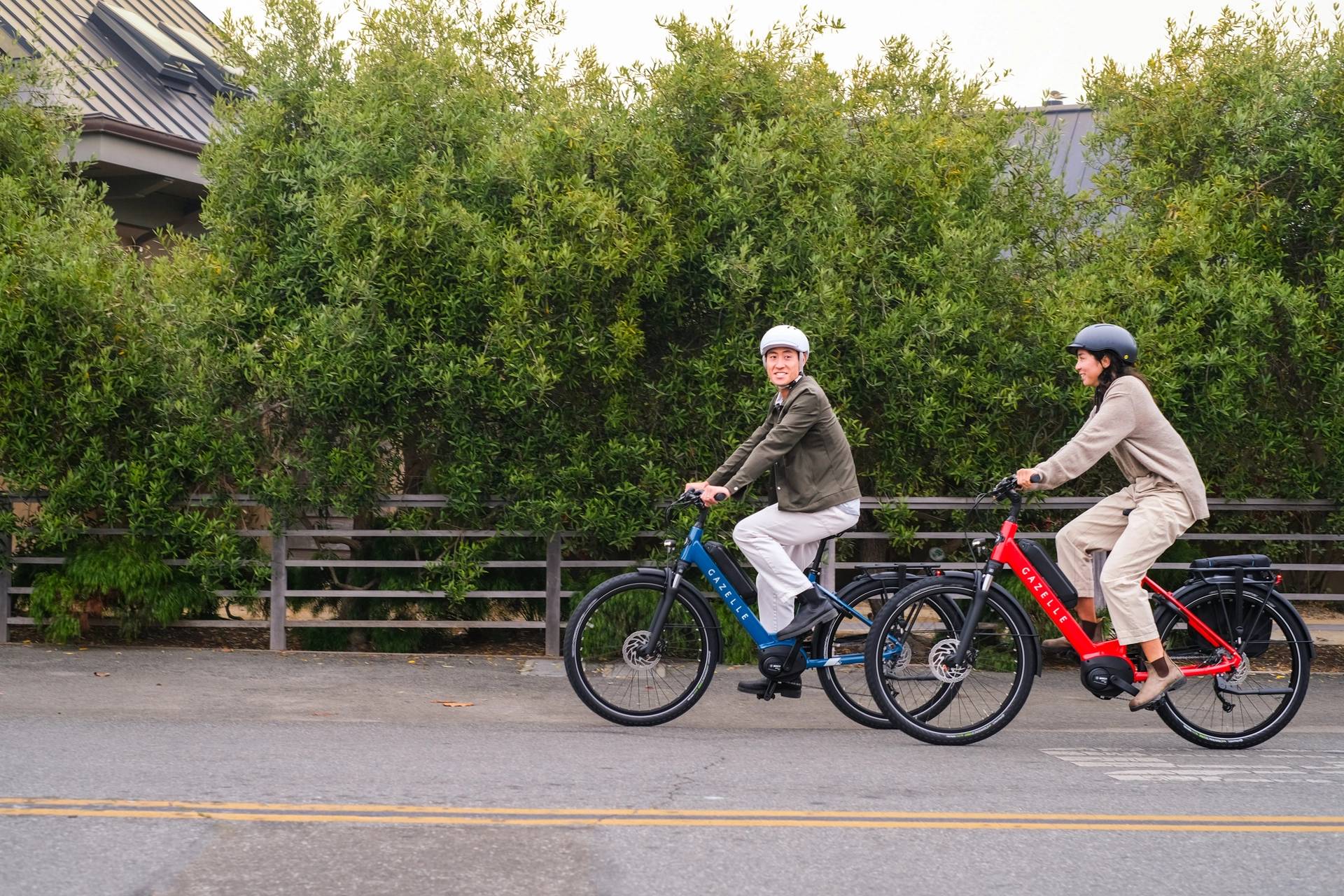
When someone walks in asking which eBike to buy, the next question is usually "will it work for my commute?" And that's usually less about the bike and more about your route, where you'll park, and where the bike will sit all day.
So this is what we tell people at the shop in Fort Greene, specific to Brooklyn and current as of mid-2026.
Brooklyn has the bones for this
NYC has more than 1,000 miles of bike lanes and over 200 miles of protected (physically separated) lanes, and Brooklyn has the most; the network keeps growing. Since late 2025, NYC caps e-bike operating speed at 15 mph citywide, whatever the bike's class or motor cutoff.
The gaps: the protected network isn't fully connected yet, especially in the outer borough, and some routes that look great on a map turn into two blocks of mixed-traffic anxiety. Knowing which segments work is most of the local knowledge.
Bridge crossings (the main commute math)
If you live in Brooklyn and work in Manhattan, the bridge is the part you'll have the strongest opinion about. Here's each one.
Manhattan Bridge
The default for most Brooklyn-to-Manhattan commutes. Dedicated bike path (north side), separated from cars. Steep grade on the Manhattan side, fine on an eBike. Runs from Sands Street in DUMBO/Vinegar Hill to Canal Street and the Bowery.
- Best for: lower Manhattan, Chinatown, SoHo, the East Village.
- Watch: it crowds at rush hour, so keep your speed down, ring your bell early, and pass with room.
Brooklyn Bridge
It has a separated bike lane now (since 2021). It's scenic, but slow, because foot traffic spills over from the pedestrian level, so we think of it as a great Saturday ride more than a daily commute route.
- Best for: weekend rides, showing the city to visiting family.
- Watch: tourists cross the lane, so slow down.
Williamsburg Bridge
Two-way bike path, separated from cars. Wider than the Manhattan Bridge path and less crowded. Connects Williamsburg/Bed-Stuy to the Lower East Side and East Village.
- Best for: Williamsburg, Bed-Stuy, Bushwick commuters heading to LES, East Village, Union Square.
- Watch: the Brooklyn-side approach has a steep ramp. Easy with assist, harder on a regular bike with cargo.
Verrazzano
Bikes aren't allowed on the Verrazzano, so it's not an option for a bike commute.
Brooklyn neighborhoods we know well
Park Slope, Prospect Heights, Crown Heights → Fort Greene/Downtown
Take Eastern Parkway (protected lanes on the north side), then up Vanderbilt Ave or Carlton Ave to Fort Greene. The DeKalb/Fulton lanes through Fort Greene are reliable. This is the route many customers take to drop off bikes for service.
Williamsburg → Lower Manhattan
Kent Ave runs the East River with a protected bikeway and is the local default. Drop down to the Williamsburg Bridge access ramp at South 5th Street.
Bed-Stuy → Manhattan
Tompkins Ave and Bedford Ave both get ridden heavily. The Bed-Stuy network has improved a lot in the last three years; Bedford has dedicated lanes for much of its length north of Atlantic.
Cobble Hill / Carroll Gardens / Red Hook → Manhattan
Smith Street and Court Street are the main north-south arteries. For Red Hook, the trip up to the Brooklyn Bridge means a stretch on Columbia Street that improves the further north you go.
Park Slope → Bay Ridge / Sunset Park
Going southwest, 8th Avenue has dedicated lanes and is well-ridden. 3rd Avenue under the BQE is workable but cars are aggressive; we don't love it for new commuters.
Anywhere → Fort Greene shop
Coming in for a test ride or service, plan to arrive via Flushing Avenue. The shop is at 134 Flushing Ave, directly across from the Brooklyn Navy Yard. Flushing has bike lanes both directions; it's how most customers get here.
Parking: where to actually leave the bike
This is where most new riders get stuck. The bike is too expensive to lock to a random meter, but you can't carry it everywhere. Here's what works.
At work
- Office bike rooms. Most newer commercial buildings have them. NYC's commercial-tenant bike-access law (since 2009) requires larger buildings to provide tenant bike access. If yours doesn't, ask; many landlords have lockers they don't advertise.
- Garages with bike parking. Some private garages in Midtown and Downtown offer monthly bike-parking memberships ($35-$75/month). Search "[neighborhood] bike valet" or call a garage nearby.
- Bike valets at major buildings. The big towers (Empire State, One World Trade) often have valets for tenants.
Around the city (errands, dinner, meetings)
- DOT bike racks. Citywide and stable, but a U-lock plus a cable for the front wheel is the minimum we'd ride out with.
- Inside friendly bars and coffee shops. Some let you bring the bike in. Worth asking.
- Public bike-share docks. Don't. Those are for Citi Bikes, not personal eBikes.
At home (the biggest one)
The question we get asked most:
- Ground-floor apartment, garage, or backyard: no constraint.
- Walk-up apartment: carry the bike up if you can. Most Tern and Benno bikes are made to fit through doorways and up stairs.
- Building lobby or storage room: ask the super. Most NYC buildings allow bike storage; some require a lock and ID tag.
- Bike room in your building: check before you buy. If there isn't one, ask if they'd add it (NYC has landlord incentives).
- Street parking: possible with the right lock setup, but not what we recommend for an expensive eBike, cargo bikes especially.
If you're eyeing a front-loader cargo bike, parking becomes the buying question. Front-loaders don't fit up apartment stairs or in most lobbies. Have a ground-floor storage plan figured out before you buy.
Locks: what we actually recommend
For a daily eBike commuter in Brooklyn:
- Two locks, minimum. A serious U-lock for the frame (the ABUS Granit XPlus 540 is our default), plus a secondary cable or folding lock for a wheel.
- Take the battery off if it's removable and you're locking up for more than 30 minutes. Most eBike battery thefts happen because the battery was easy to grab.
- We recommend ABUS. The Bordo Granit XPlus 6500 is what most of our team carries. For street parking in higher-theft areas, add the Granit X-Plus 540 U-lock.
Which ABUS lock is best for you →
Keyed-Alike: one key for all your locks →
Cold-weather commuting
Brooklyn has 3-4 weeks of genuinely unpleasant winter and the rest is workable. Most customers ride year-round with a few adjustments.
- Belt-drive bikes are the move for year-round. Chains rust and stretch from road salt; belts don't.
- Studded tires for the worst weeks. Schwalbe Marathon Winter Plus is what we sell most.
- Bring the battery inside. Don't charge it cold. Don't store it cold for weeks.
- Fenders are mandatory. January puddles are 80% road salt.
- Lights. The Supernova M99 Pro is overkill in a good way.
Cold trims your range for the day (capacity comes back when the battery warms up); estimate yours with the Bosch range calculator.
Rainy day commuting
NYC isn't Portland, but spring brings real downpours. Most customers ride through them once the bike's outfitted.
- Full-length fenders, from day one.
- Rain cover for front-loader cargo bikes (Urban Arrow and R&M both sell branded ones). Kids stay dry.
- A jacket with vents. Pearl Izumi BarrierLite is what most of our staff wears.
- Drivetrain wipe-down when you get home. Two minutes with a rag saves a chain every winter.
Daily commute math
Rough numbers for a Brooklyn-to-Manhattan commute:
- eBike cost (28 mph-assist commuter, mid-range): $4,000–$6,000. Plus locks, lights, fender, helmet, maybe $400.
- Cost per year (5-year amortization): ~$1,000.
- NYC monthly subway (2026): ~$132/month = ~$1,584/year. The bike pays for itself in year one if you fully replace the subway.
- Electricity to charge the bike: ~$15/year.
Add the time savings (an eBike often beats the subway under 5 miles), skipping other people's armpits, and the workout, and the math gets one-sided.
Coming in to ride one?
The shop is at 134 Flushing Ave, Brooklyn. We're open seven days, Mon–Sat 9–5 and Sunday 10–3; book a test ride ahead or walk in. Most rides are 15–45 minutes on Brooklyn streets, not a parking lot. You'll know within five minutes if the bike is right.
If you can't make it to Brooklyn, try the Matchmaker. It's five questions, takes about sixty seconds, and gives you a real recommendation from our team.