Putting your e-bike away for the winter: the battery first, then the rest
If you're parking your e-bike until spring, the battery is the part to get right: take it off, store it at 30 to 60% charge, and keep it warm and dry. Here's the rest.
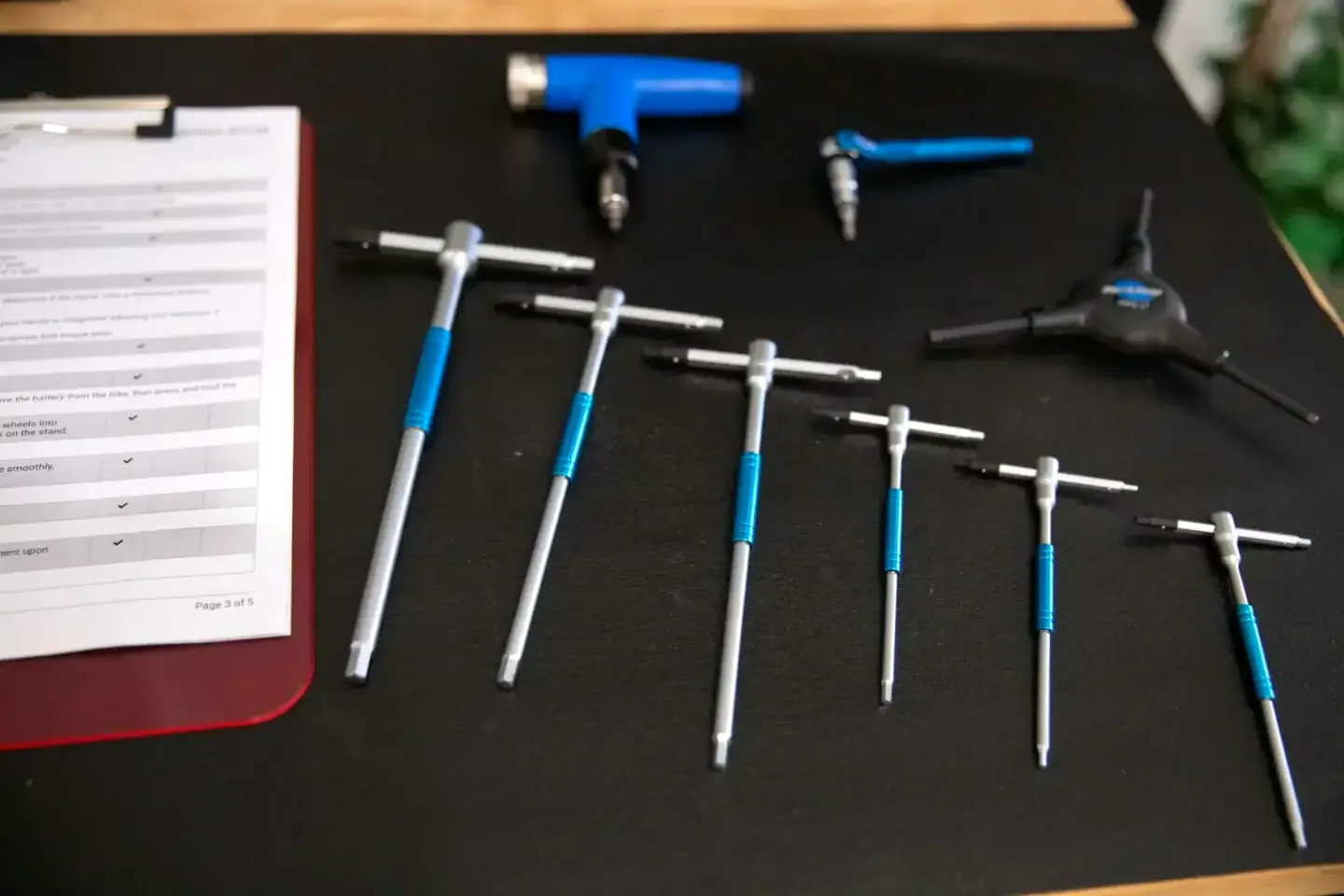
Around this time of year people start asking us some version of the same question: I'm not going to ride much until spring, so what do I actually need to do before I put the bike away? If you live somewhere with a real winter, that's a good question to ask in October and not in March, because almost everything that goes wrong with a stored e-bike happens quietly while it sits.
So here's what we'd do with our own bikes. It's a short list, and most of it is about one part.
Start with the battery, because it's the part that can't sit and wait
Most of the bike is pretty forgiving about sitting for a few months. A lithium-ion battery is a little less forgiving, and the good news is that Bosch is very specific about how it wants its batteries stored. Everything in this section comes straight from the Bosch battery manual.
Take it off the bike. Bosch says plainly that leaving the battery on the bike for storage isn't recommended. Whether yours is a PowerTube inside the downtube or a PowerPack on the frame or rack, it comes off with the key that came with your bike. If you're not sure how yours comes out, our guides on removing a PowerTube and removing a PowerPack walk you through it.
Store it partly charged, not full and not empty. For anything longer than three months, Bosch wants the battery at 30 to 60%. On the battery's own charge indicator, that's two or three lights lit. A pack that sits full for months is harder on the cells. And a pack that sits empty for a long time can be damaged and lose a lot of its capacity, even though it barely drains on its own.
Check on it while it sleeps. Bosch says to look at it after six months, and if you're down to one light, charge it back up to that 30 to 60% band. We'd check a little more often than that, every couple of months, because it takes ten seconds and you might as well catch it early.
Don't leave it on the charger. It's tempting to leave it plugged in so it's "ready," but Bosch doesn't recommend leaving the battery permanently connected to the charger. Charge it to the storage level, unplug it, and walk away.
Where the battery lives matters as much as how full it is
You want a spot that's dry, a little ventilated, and boring. Bosch's list:
- A room with a smoke alarm, somewhere inside your home.
- Away from heat sources and anything flammable, and out of direct sun.
- Between 50 and 68°F (10 to 20°C) for the best long-term life. That's a closet, a basement that stays above freezing, or the corner of a spare room.
- Never below 14°F (−10°C) or above 140°F (60°C). If your garage gets colder than that in January, the battery shouldn't be in it.
If you want to wipe it down first, use a soft, damp cloth, and don't submerge it or hit it with a hose. Bosch also suggests cleaning the connector pins now and then and giving them a very light coat of grease, so you might as well do that while it's in your hands.
Then the bike itself
Indoors is better if you have the room. A bike can generally live outside as long as it's protected from snow and rain, but a garage, shed or basement is better. If you've got the choice between a cold space and a heated one, you might want to know that Bosch lists a storage range of 50 to 104°F (10 to 40°C) for the motor and the display too. So we think a heated basement or hallway is the kinder spot. If floor space is the problem, we've heard good things about wall racks like the Steadyrack, which can handle the weight of most of the e-bikes we sell. There's more on that in our indoor storage article.
If it has to stay outside, cover it. A good cover keeps the weather off and turns an expensive bike into an anonymous shape, which makes it a lot less interesting to a thief. Look for openings you can run a lock through, plastic fasteners rather than metal, and a plain black cover with no logo. Our guide to outdoor covers has more, including what's worked for bigger cargo bikes.
Clean the drivetrain before it sits. If you've been riding through fall rain, or any road salt has started showing up where you live, rinse it off the chain, cassette and derailleur and then lube the chain. Salt is corrosive. A salty chain that sits for three months is pretty much how you end up with a rusty, stiff drivetrain in March. If your bike has a Gates belt, there's nothing to lube; the belt and its sprockets don't rust, so a quick rinse to get the grime off is enough.
Pump up the tires. Top them up before the bike goes away and check them again before your first ride back. When you're riding, it's worth checking pressure about once a month anyway, because low tires cost you range.
Riding some of the winter instead?
You might put the bike away for the worst stretch and still want it on a clear, dry day, and that's completely fine. The battery rules shift a little: bring it inside between rides, let it warm up to room temperature before it goes on the charger (Bosch specs charging between 32°F and 104°F, or 0 to 40°C), and expect less range on a cold morning. That range comes back when the pack warms up, so it isn't damage. We wrote a whole piece on riding through the winter if that's more your plan.
The one thing we'd do before spring
Bosch says the system should be checked by an expert at least once a year, and our own schedule is once a year or about 2,000 miles, whichever comes first. The months the bike is parked are a pretty good time to get that done, since you're not giving up any riding. Our yearly tune-up covers a full inspection, brakes, shifting, a chain and cassette wear check, a wheel true, a torque check and a Bosch firmware update. If you've been wondering how your battery is holding up, you might also ask for a battery health check while it's in. It tests capacity, cell balance and charge-cycle history, so you know where the pack really stands. Then when the first warm Saturday shows up, the bike's ready to go.
If you'd like us to take a look before you put it away or before you bring it back out, you can book a service visit here. We work on bikes whether or not you bought them from us.