How to carry kids on an e-bike: the age-by-age answer we give on the floor
Front seats, rear seats, longtail benches, and front-loader boxes, matched to your kid's age, with the MIK vs MIK HD trap that causes most returned child seats.
A common ask on our floor: a customer wants a specific bike without the child seat, because they already own a Yepp Maxi and plan to reuse it.
That is the modern cargo-bike parent. They know the seat by name, and the real question is which of several mounting systems matches the seat, the rack, and the kid. This is the walk we do in the shop, ordered by age, with the compatibility traps flagged.
First, the law (New York edition)
New York's Vehicle and Traffic Law (VTL section 1238) sets the rules for child passengers:
- No passenger under age 1. Not in a seat, not in a box, not in a carrier. The statute has no exception, and neither do we. Our own floor is 12 months, which lines up with the law.
- Ages 1 to 4 ride in a properly affixed child seat with the harness buckled, in an approved helmet.
- Every passenger age 1 through 13 wears a helmet. The seat handles the harness for the little ones; the helmet rule runs all the way to 14. You should wear one too.
Most e-bikes we sell are pedal-assist, which matters to parents because the bike only moves when you pedal. Details on classes and the city's rules live in our safety guide.
Age 1 to about 3: the front seat era
The Thule Yepp 2 Mini bolts to the head tube, seating the kid between your arms. First-time parents flinch, then ride once and get it: the kid is in your sightline and inside your arms, you can hear every word, and the bike handles better than with that weight over the rear wheel. It's the seat we recommend most on a standard-frame city bike, for a passenger from 12 months to about age 3 and up to 33 lb. On a longtail like the GSD there is no front seat; the passenger rides the rear deck, covered below.
Age 1 to 6: the rear seat, and the trap that fills our returns shelf
The rear-mounted Thule Yepp 2 Maxi carries a kid up to 40 lb and 43.3 inches tall (the US rating, ASTM F1625; you may see 22 kg on EU packaging for the same seat). It mounts two ways: a frame mount that bolts to a frame-specific carrier, or a universal rack mount that straps to most standard rear racks. The universal strap is the low-risk pick because it is not tied to any one rack standard.
Here is the mistake that fills our returns shelf. Some bikes ship with a click-plate rack instead, and there are two click standards that look nearly identical: MIK and MIK HD are not the same. MIK is the Dutch click-on interface for bags and standard seats. MIK HD is the heavy-duty version on cargo bikes, and regular MIK accessories do not mate with it. This mismatch is the number-one cause of child-seat returns at our counter. So before you order, tell us the bike, model year, and the seat you own or want. That two-minute email saves a three-week backorder.
One caveat we repeat daily: the rack's weight rating is the cap, not the seat's. A seat rated for 40 lb on a rack rated for 27 lb is a 27 lb setup.
Age 2 to 10: the longtail bench
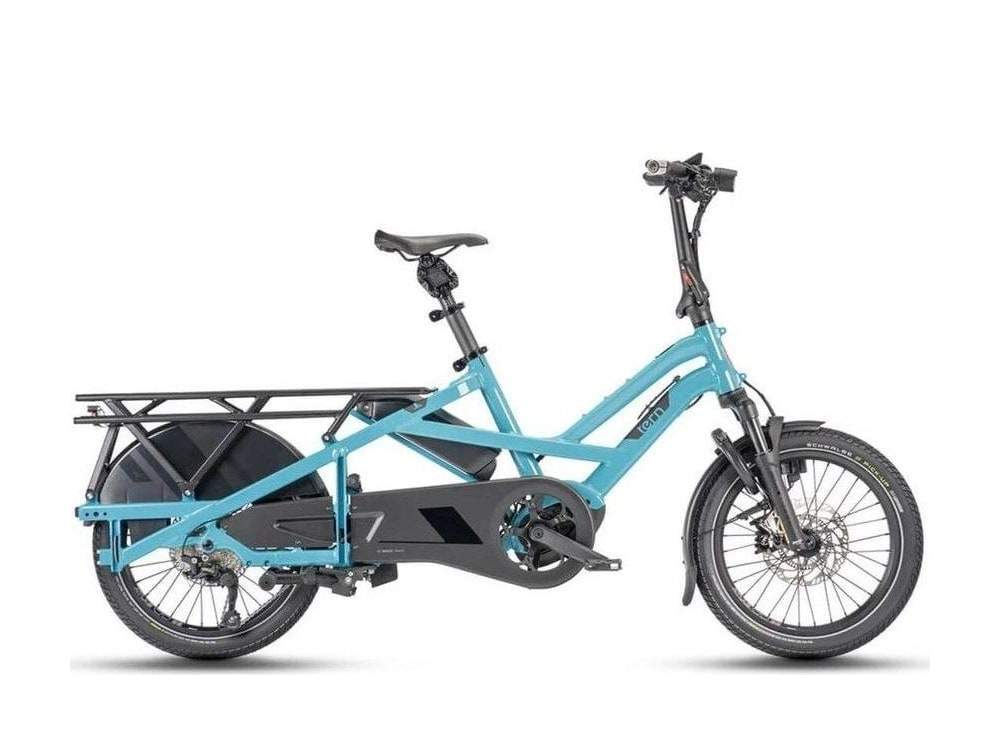
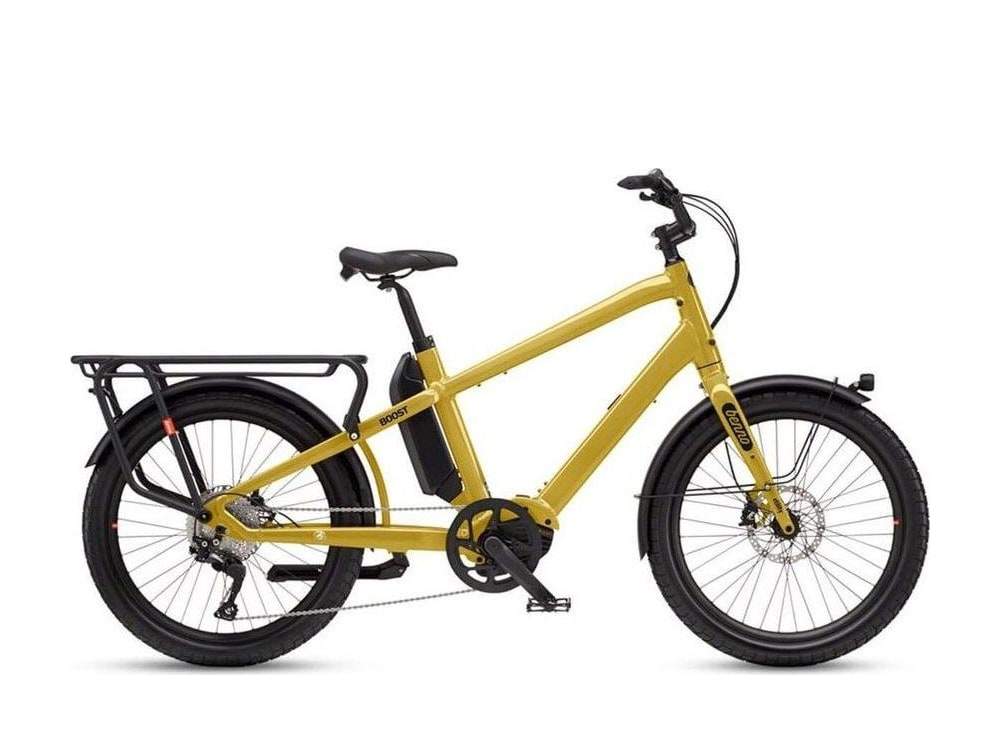
When the kid outgrows the seat, or a second kid arrives, the answer is a longtail cargo bike with a bench. That is the Tern GSD or the Benno Boost, plus the passenger kit:
- Tern Clubhouse Gen 3: the rail cage that turns the GSD's deck into a two-kid cockpit. It ships with both rear bars in the box. Add seat pads for comfort; foot support (Stow Decks) is a separate part.
- Captain's Chair Gen 2: a backrest-and-armrest seat. On the GSD it holds one adult or two kids.
- A younger sibling's rear seat can share the same deck ahead of the bench, so one GSD does daycare and elementary drop-off in a single run.
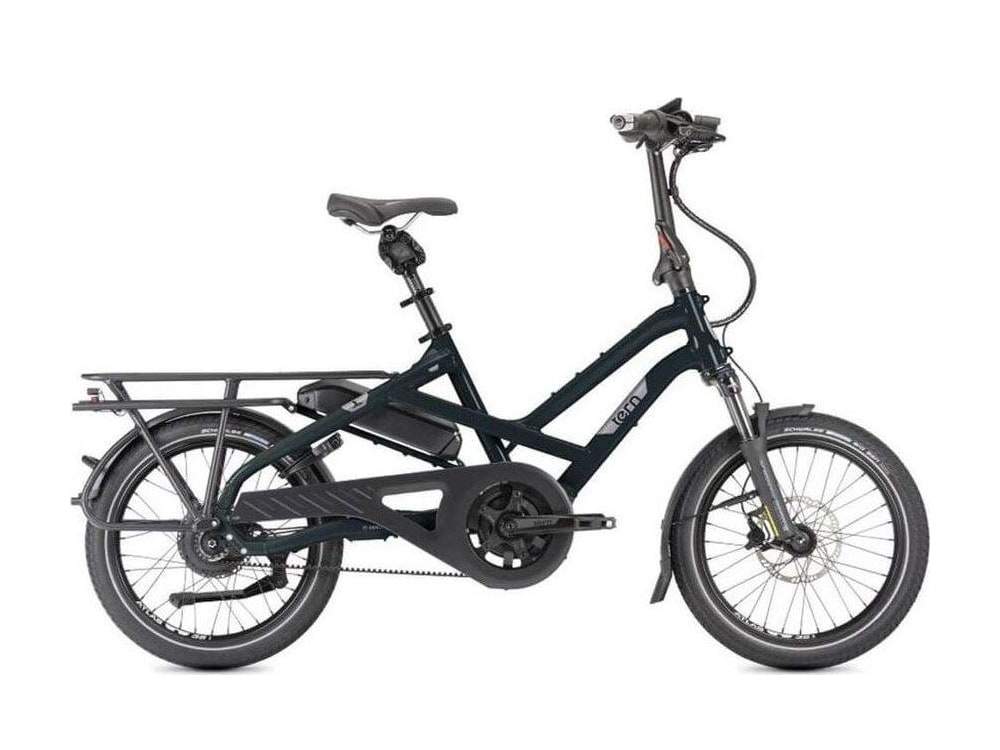
One thing not to buy on a current GSD: it already has a built-in wheel guard and a locking double kickstand, so skip anyone trying to sell you those. These setups reconfigure as kids grow, so buy for this year's kids, not for 2031.
The front-loader: kids in the box
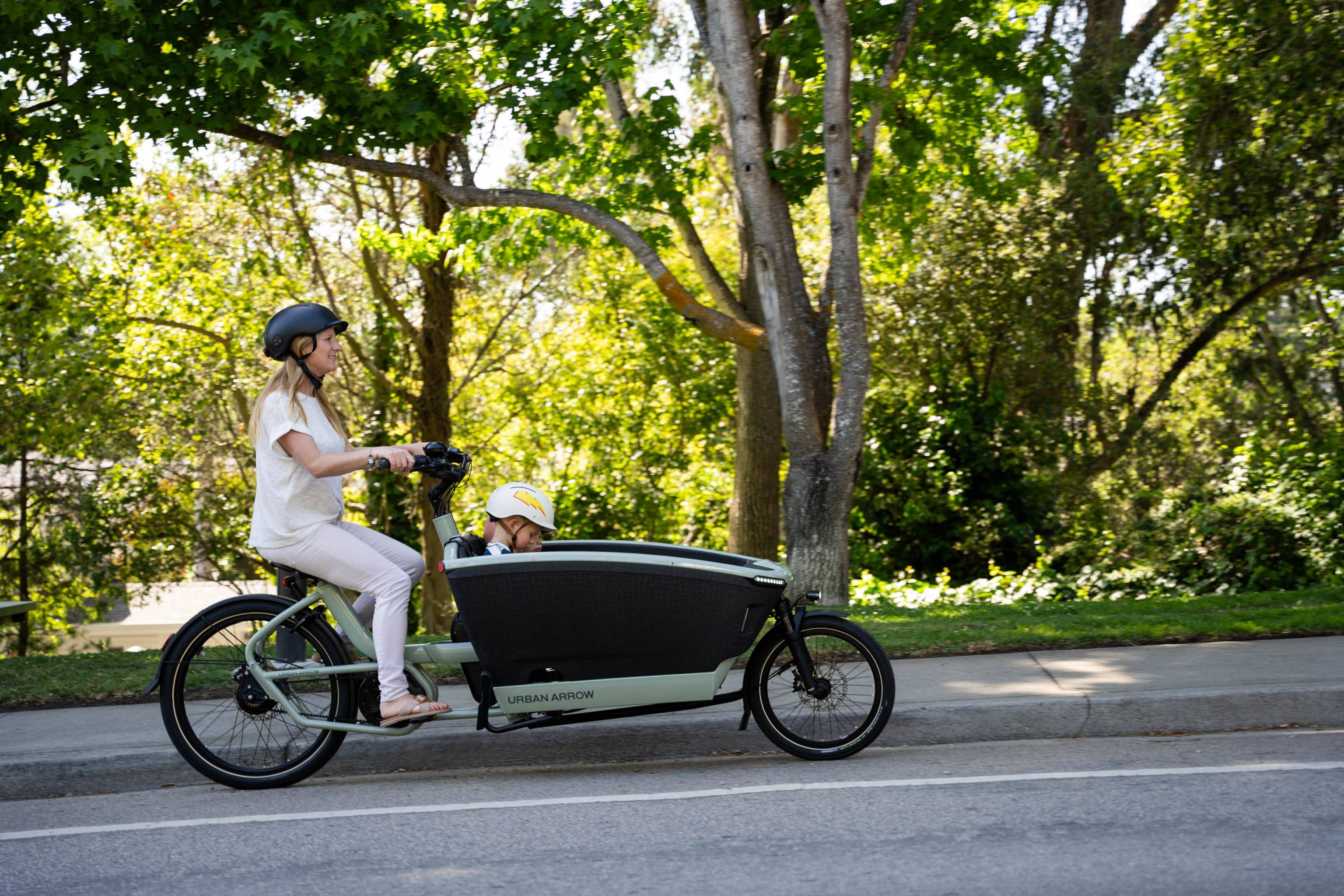
For two or more young kids, or kids plus groceries plus the dog, the front-loader is the family station wagon. The Urban Arrow FamilyNext seats two kids on the factory bench inside an EPP foam box, face-forward, with room at their feet for backpacks. It runs the Bosch Cargo Line motor and adds a suspension fork. The Riese & Müller Load did it with full suspension, which keeps a toddler asleep across bad pavement (more in our suspension piece). R&M has left the US market, so we no longer sell them new, but we still service every one we sold.
Parents look at an 8-foot bike and assume it rides like a truck, but it doesn't. The cargo sits low and centered between the wheels, so it balances like a wheelbarrow and rides easier loaded than you'd believe. The test ride converts almost everyone. What it costs you is parking length and storage, a real trade-off. Our cargo bike buyer's guide goes deep on longtail versus front-loader.
What about trailers?
On protected greenways, trailers are fine and cheap. For NYC traffic we steer families away: the trailer rides low, behind you, at bumper height and outside your sightline, which inverts everything we like about the front-loader. On the Shore Parkway greenway on weekends, a trailer you already own is fine, and several bikes we sell (the Tern GSD among them) have trailer mounts. For a daily school run across an avenue, put the kids on the bike.
The build-out, in order of what's needed day one
Buyers assemble eight-item carts, then ask what can wait. Our answer:
- Day one, before the first passenger ride: the seat or bench, helmets, the wheel guard and spoke protection that keep small feet away from the spokes, and the lock system. On a current GSD the wheel guard is built in; on bikes without one (an HSD, a Quick Haul, an Orox) it is an add-on like the Sidekick Wheel Guard. Either way the leg and rear-wheel protection is required safety gear, not an accessory to defer.
- First month: rain cover or bike poncho once you have met weather.
- Can wait: panniers, second battery, the fancy bell. Accessory backorders should not delay the bike; everything here retrofits.
Every family's version is a little different, which is why the matchmaker exists, and why the kids and cargo collection is organized around passengers, not price. Come by 134 Flushing Ave with the kids; the test-ride seats and benches are installed and rideable. Fitting your family to a bike is the part of this job we like best.