The 2026 cargo bike buyer’s guide
There are really two kinds of cargo bike: longtails, with the kids behind you, and front-loaders, with the kids in front. Start there, because almost everything else follows from that choice.
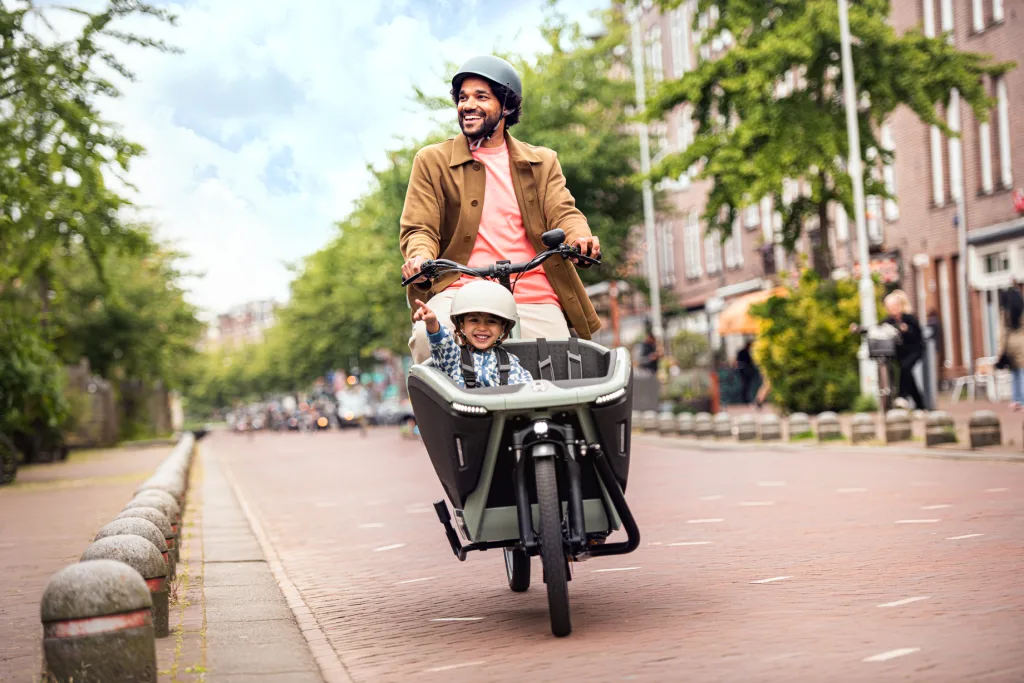
There are really two kinds of cargo bike. Longtails put the kids behind you, and front-loaders put them in front. So start there, because pretty much everything else follows from that one choice.
The short version: if you have two kids and a ground-floor apartment, you’ll often end up on a front-loader. One kid and a walk-up usually means a compact longtail. Three kids, plus a need to haul other things too, points you at a full-size front-loader. That covers most of the customers who walk in. The interesting cases are the ones in between, and this guide is mostly about helping you figure out which group you’re in.
We’ve sold roughly every cargo bike that matters in the US market since 2013. Today we stock four brands that each solve the problem differently: Urban Arrow, Tern, Benno, and Vello. The bikes we stock are the ones we’d put our own kids on. Here’s how we think about the category in 2026.
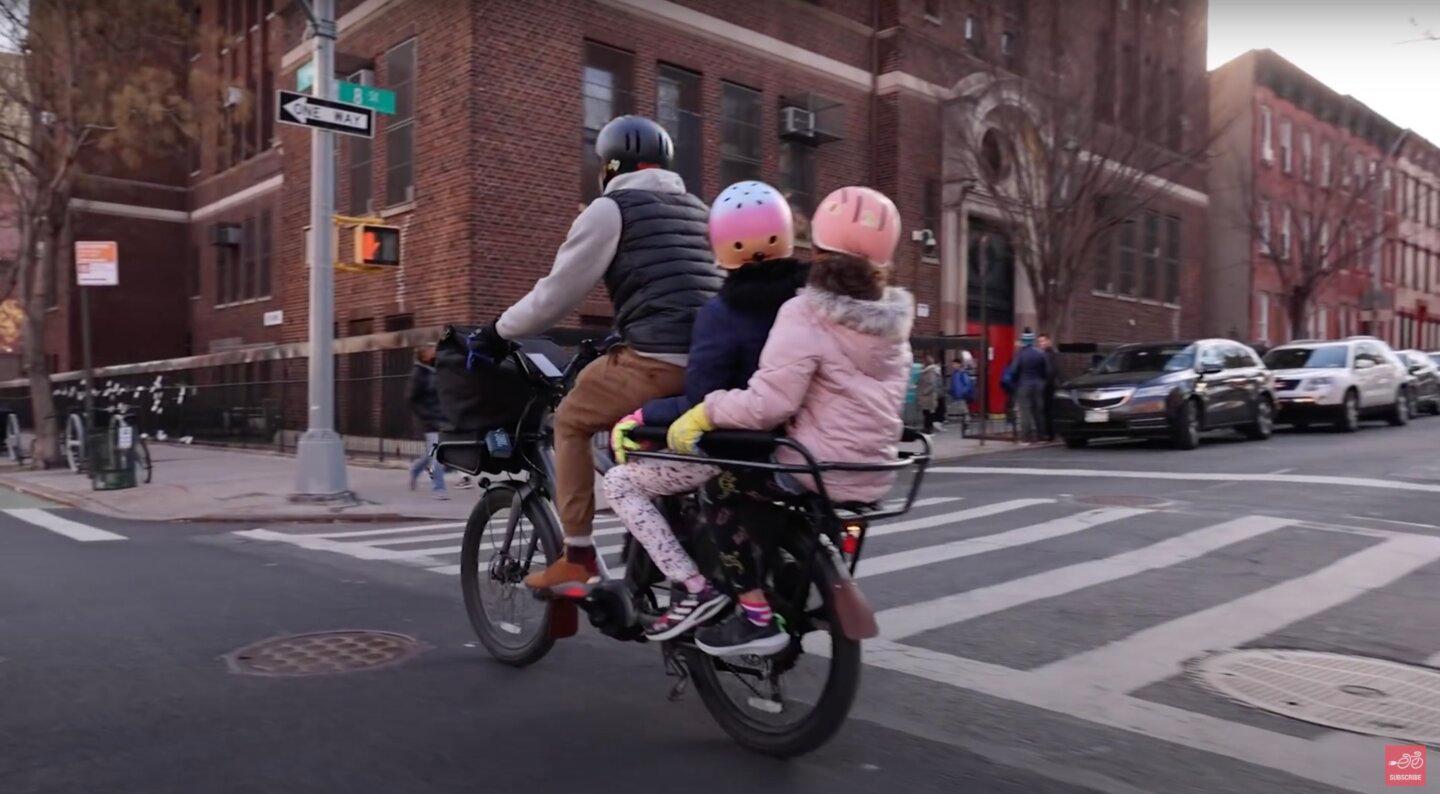
The big fork: longtail or front-loader
Everything downstream of this choice depends on your answer to one question: do you want to see your kids while you’re riding? If yes, front-loader. If you’d rather feel the bike like a regular bike and let the kids sit behind you, longtail.
That’s the emotional split. The practical split is load, turning radius, and apartment-lobby geometry. Front-loaders carry more (three kids, a stroller, and groceries all at once) but are harder to corner, harder to store, and harder to thread through a narrow doorway. Longtails ride like a slightly stretched regular bike: tighter turning radius, easier to park on a Brooklyn sidewalk.
When longtails win
Longtails win when you care most about how the bike feels unloaded. If you ride to work solo most days and only carry a kid twice a week, the longtail’s regular-bike handling matters more than the front-loader’s cargo volume. They also win when storage is tight: most are 10–20 inches shorter than front-loaders, and several have smart storage tricks. The Tern GSD stands on its tail. The Vello SUB’s frame stays rigid and full length, but its pedals fold and its stem rotates so the handlebar turns sideways, narrowing the bike to roughly 11 inches for indoor storage.
When front-loaders win
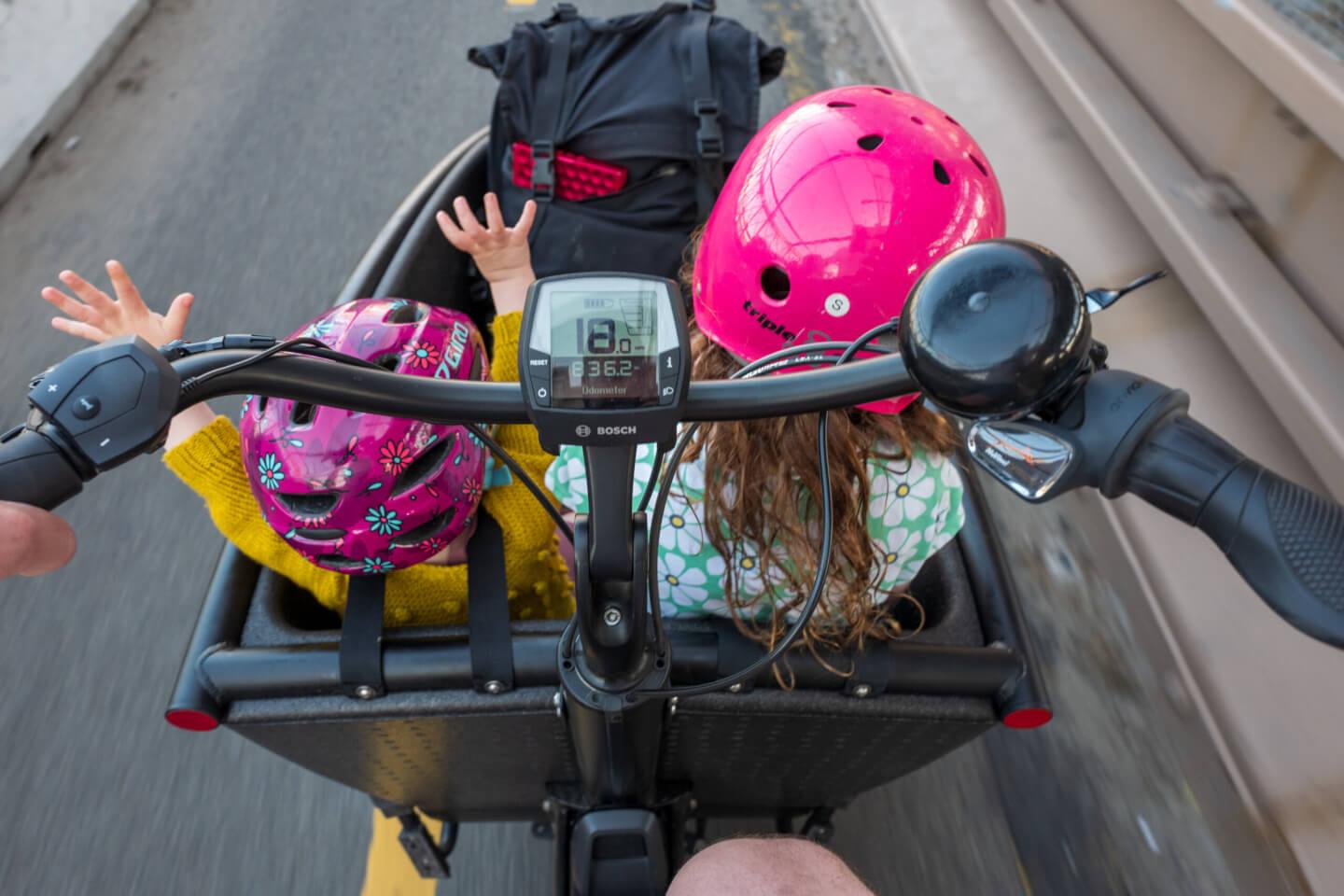
Front-loaders win when you’re doing three things at once: three kids plus a soccer ball plus groceries, two kids plus the dog plus the Christmas tree, or a week of camping gear plus a kayak. The box in front of your handlebars is basically a small pickup truck with pedal-assist. If you’re doing car-replacement math (we’ll get to the math), the front-loader’s capacity is what justifies it.
The five questions we ask at the shop
Before we recommend a bike, we ask five questions. Budget and where you ride are the obvious two. The other three are where fit happens.
01 · What are you actually carrying?
The gap between “one kid twice a week” and “three kids every day plus a week of groceries” is enormous. Be honest about your peak load. A bike sized for your heaviest day handles your typical day with ease; a bike sized for your typical day may not handle the heaviest one.
02 · How hilly is your ride?
Williamsburg to Dumbo: flat. Park Slope to Prospect Heights: mildly rolling. Brooklyn to Washington Heights: serious climbs. Motor choice is downstream of this. A Bosch Active Line handles flat. A Performance Line handles rolling. A Performance Line CX or Cargo Line is what you want when you’re hauling 100+ pounds of kids and groceries up a real hill.
03 · Where will the bike live?
A garage or ground-floor storage area gives you the most options. A walk-up changes everything because most cargo bikes are difficult to carry upstairs. Measure the elevator, hallway, doorway, and parking space before choosing the bike.
04 · What’s your real budget?
Cargo-bike prices move with the catalog and configuration, especially once child seats, weather protection, and locks are included. Compare the complete setup, not only the base bike. If financing matters, current terms are on our financing page.
05 · How many kids, how old?
This is the one that surprises people. A one-year-old rides differently than a six-year-old, and an eighteen-month-old needs a different seat than a three-year-old. Plan around the youngest rider, and know the floor: passengers start at 12 months (New York law doesn’t allow bike passengers under age one, and that’s our minimum everywhere). Expecting, or riding with a baby on the way to their first birthday? We’ll help you plan the bike now so it’s ready the day they turn one. The bike that fits your family when the kids are tiny may not be the bike you want in four years, so we often steer parents toward a simpler, more resellable bike first, then trade up as the family grows. Our trade-in program exists for exactly this.
Longtails we stock
These longtails fit different lives. Here is how we sort them in practice.
Tern Quick Haul
Our pick for walk-up families with one kid or occasional cargo. Light enough to lift upstairs when you really have to, small enough to fit a Brooklyn hallway, and happy carrying a kid and the groceries. No other bike we sell makes cargo cycling work for more first-time buyers.
Tern GSD
The Quick Haul’s bigger sibling, and the longtail two kids fit on most comfortably. Longer range, more motor, more capacity, and a 220 lb rear-rack rating that takes two kids plus their gear. It stands vertically, so it tucks into tighter storage than you’d expect. It’s the right answer when the Quick Haul feels too small but you don’t want a full-size front-loader.
Benno Boost
It’s the handsome longtail of the group. It rides on 24-inch wheels and can carry two small kids or an older child in a compatible passenger setup. Depending on the current trim, assist may cut off at 20 or 28 mph. NYC operating rules still apply regardless of the motor cutoff.
Vello SUB
The lightest longtail we sell, and the one that disappears when you’re done with it: the stem folds and the pedals retract so it lives indoors at roughly 11 inches wide. Runs a Bosch Cargo Line on a Gates belt, and the integrated MIK-HD rack takes up to two child seats tool-free. The pick for a small apartment, an elevator building, or anyone who wants a longtail that doesn’t announce itself.
Front-loaders we stock
Urban Arrow FamilyNext
The Urban Arrow FamilyNext seats two children on its bench, and a compatible extra bench can add a third position. Its baby-seat adapter can carry a compatible seat once the passenger is at least 12 months old. New York law prohibits bicycle passengers under one year old, and 12 months is Propel’s minimum everywhere. Measure your doorway and storage space against the exact bike before ordering.
Urban Arrow Cargo XL
The commercial-grade front-loader. Our contractors, florists, and couriers buy this one. If you’re moving payloads for a living, it’s the bike you want.
A note on Riese & Müller (owner support, not a current pick)
For years the Riese & Müller Load and Multicharger were fixtures of this guide. R&M has left the US market (US sales ended July 31, 2026) and Propel no longer sells new R&M bikes, so they’re out of the recommendation lists above. If you already own one we sold, contact us for current parts, service, and warranty-support availability. Details are on our R&M owner-support page.
The motor question, briefly
Almost every cargo bike we stock runs a Bosch motor. Bosch’s cargo-tuned motor (Cargo Line) produces 85 Nm of torque, which is what you need to pull a fully-loaded front-loader up Flatbush Avenue without thinking about it. The Performance Line CX makes the same 85 Nm and is the other motor you’ll see across the lineup. Active Line is for flat, light-load riding; most cargo bikes won’t ship with it.
Non-Bosch motors exist and work well. We focus on Bosch because our service team is certified on the system and can support its diagnostics and replacement parts.
Single battery or dual?
Start with your longest loaded day, terrain, assist level, and charging access. Use the range calculator as an estimate, then leave a reserve for cold weather, hills, and battery aging.
A dual-battery setup adds range, weight, cost, and another battery to manage. It’s useful when a single compatible battery cannot cover the longest loaded day with a reasonable reserve. Confirm compatibility and current pricing on the exact bike.
What we don’t recommend
Before buying any cargo bike, check the complete-bike safety certification, passenger and load ratings, replacement-battery path, parts availability, and who will service its electrical system. A low purchase price does not help if a proprietary part is unavailable later.
If you’re comparing a bike we don’t sell, send us the model and what you plan to carry, and we’ll tell you whether we can verify the specs and support it.
How to actually decide
Come by the Fort Greene shop and test-ride three bikes with the kids loaded in, on actual Brooklyn streets rather than a parking lot. The bike you think you want is often not the bike you ride home, and fifteen minutes of pedaling under real load on real asphalt beats a thousand words of research.
If you’re not ready to talk to anyone yet, run the matchmaker. It’s five questions, takes about sixty seconds, and narrows the floor to the bikes that fit your life. If you can’t make it to Brooklyn, send us your route, riders, storage constraints, and budget. If you’re outside New York, ask about current shipping options and how service would work where you live.
Last reviewed July 2026. Questions? Reach our team.
One email a month. Worth opening.
New bikes, long-term reviews, the occasional take on e-bike policy in New York. No sales blasts, no “we miss you” emails.