E-bike suspension: what actually smooths out a 60-pound bike
Tires, seatposts, forks, and full suspension, ranked the way our mechanics rank them. What each step costs, what it fixes, and when full suspension is worth it.
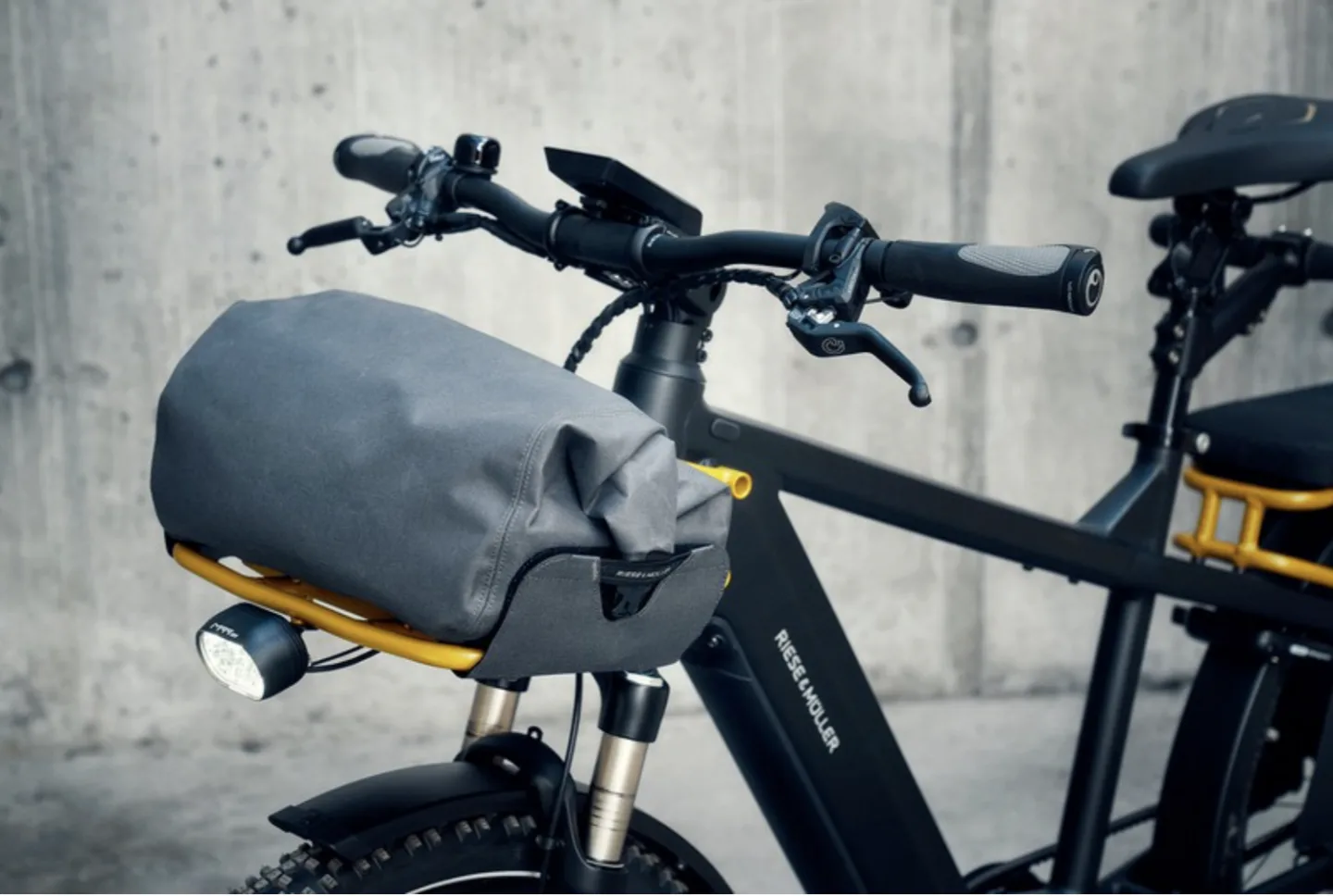
A customer rolls in a fork-equipped commuter and says the suspension stopped working. Nine times out of ten it didn't break. It's an air fork that hasn't been serviced since it left the factory, so the seals dried out, stiction set in, and now the fork only moves on scary-big hits. What it needs is a lower-leg service, and you can keep the fork.
Suspension on an e-bike is less about plushness than upkeep, weight, and keeping the tire on the pavement. Here's how we rank it, cheapest fix first.
Why the e-bike math is different
A regular commuter weighs about 25 lb. The e-bikes we sell run 50 to 80 lb, and you ride them faster, more often, with more on board. Three consequences:
- Impacts scale with weight and speed. The same pothole hits harder at 20 mph on a 65 lb bike with groceries than it did on your old road bike.
- Braking is where suspension earns its keep. A fork's real job is keeping the front tire pressed into broken pavement while you brake hard. And a tire that's skipping can't stop you.
- Unsprung cargo complains. If the load is a sleeping two-year-old in a front bucket, damping stops being a luxury. It's why Riese & Müller builds full suspension into cargo bikes, which almost no one else does.
Step zero is free: your tires
Before you spend anything, check your pressure. The wide tires our bikes ship with are the primary suspension on any e-bike, sprung and damped by air volume. Run them at the top of the sidewall range and the bike rides like a shopping cart; drop toward the lower end for your weight and most "I need suspension" complaints disappear. Our tire size guide and wheel size explainer go deeper, including why small-wheel cargo bikes lean on tire volume even harder.
The seatpost and stem step
A suspension seatpost isolates the point that takes the most abuse: you, seated, at speed, over expansion joints. We stock the Cane Creek Thudbuster and the Kinekt, and either transforms a rigid commuter for a fraction of the cost of a fork upgrade. A suspension stem does the same for hands and wrists. All bolt on in minutes, need almost no maintenance, and add about a pound.
It's the right move if you feel the road in your lower back on a rigid or front-suspension bike. It's the wrong move if your front tire skips under braking, because no seatpost fixes that.
Front suspension: know what fork you have
Most suspension e-bikes carry a front fork and nothing else, and the fork tells you its job:
| Tier | Typical forks | Where we see them |
|---|---|---|
| Comfort coil | SR Suntour NCX, XCM | City commuters; 50 to 80 mm travel |
| Mid air | SR Suntour XCR Air, Mobie | E-bike-rated, bigger stanchions |
| Performance | RockShox Recon, Yari | Hard commuting, light trail |
| Premium | Fox 34/36, RockShox Lyrik | E-mountain bikes |
Two things we tell every buyer:
- Coil forks tolerate neglect; air forks don't. The entry Suntour coil forks are simple and forgiving. An air fork wants a service roughly yearly (ours runs through the service department); skip it and you get the stiction story above.
- Setup beats tier. A mid-range air fork with sag set for your loaded weight outperforms a premium fork left at factory pressure. We set sag for the rider plus usual cargo at delivery. If nobody did that for yours, it's a ten-minute visit.
Full suspension: R&M calls it Control Technology, and the name is the point
Riese & Müller puts rear suspension on touring and cargo bikes, not just mountain bikes, and calls it Control Technology. The idea is really control, more than comfort. With both wheels tracking the ground, braking and cornering grip stay consistent over pavement that would bounce a hardtail's rear tire off the road.
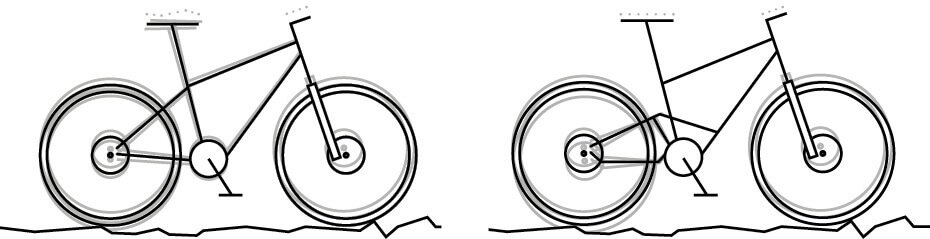
R&M applied it across the lineup, not just one bike:
- The Delite was R&M's full-suspension touring flagship, tuned to make the rider forget what the road surface is doing.
- The Superdelite carried the full-suspension touring platform into a dual-battery, long-range build.
- The Load family was the rare full-suspension front-loader. With kids aboard, it keeps them asleep over the Manhattan Bridge expansion joints.
Not every R&M is full suspension, and the split matters when someone shops used. The Charger4 is a touring and commuter bike with a front fork only, a hardtail, not full suspension. If control over rough pavement is what you're after, the full-suspension models above are the ones to look at.
R&M has stopped selling new bikes in the US, so we no longer sell these new. We do service every R&M we sold and stock genuine parts (see what the R&M US exit means). The point above is why full suspension is worth understanding on any bike you're weighing.
Full suspension costs weight, money, and an annual shock service. For daily miles on bad pavement, or passengers who cannot brace for bumps, it's what we'd recommend. For a fair-weather rider on decent roads, it's capability you won't use, and we'll tell you that.
What we'd actually do, by rider
- Rigid bike, occasional soreness: drop tire pressure to the low end of the range. Free.
- Rigid bike, daily miles, rough route: a Thudbuster or Kinekt suspension seatpost.
- Front-suspension bike that feels harsh: sag check and, if it has been years, a fork service. Book it here.
- Cargo bike you'll load with kids daily: put full suspension high on your list, and ride one back to back with a hardtail first. The matchmaker can shortcut which current bikes fit.
Questions about what your bike has and what it needs? Get in touch. We can usually tell you the fork model and its service history from your serial number.