What is an internally geared hub (IGH)?
What an internally geared hub is, how it differs from an external derailleur, and why enviolo, Shimano, and Rohloff hubs shift so differently under load.
A lot of the bikes we sell, whether they're chain or belt, use an internally geared hub (IGH) instead of an external derailleur. The difference is pretty much in the name: a derailleur shifts the chain across visible gears on the outside of the rear wheel, while an IGH keeps all its gears sealed inside the hub. Because the derailleur hangs off the frame, it’s exposed to the weather and can get knocked around, and an IGH has nothing sticking out.
Each one has trade-offs, mostly performance vs. wear (the Rohloff hub manages both pretty well). A derailleur is lighter and snappier, but it’s built for shifting while you pedal rather than under load at slow speed, so you start in an easy gear and work your way up. And its chain has to stay lubed to shift correctly.
An IGH can shift at a standstill or while soft-pedaling, something a derailleur can’t do. The catch is that you shift by easing off the pedals rather than pedaling through it, so try not to shift under full load. To varying degrees, these hubs shift cleanly only when the cranks are stationary or under light pedal pressure:
- enviolo: pedaling through a shift can bind the cables.
- Rohloff: ease off the pedals as you shift, and never shift under full load. Shifting under power wears the oil a little faster (it’s changed only every 5,000 km / about 3,100 mi anyway), otherwise there’s little harm beyond slightly quicker belt or chain wear.
- Shimano: it won’t fully bind, but you’ll feel a slight delay until you ease off the pedals, and then it shifts.
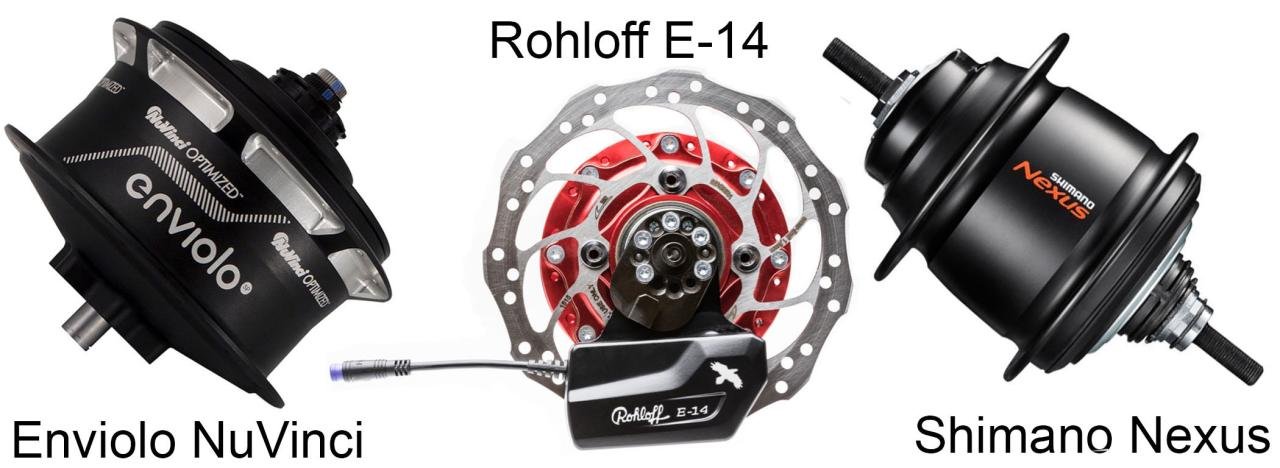
For each brand of internally geared hubs, whether it is an enviolo, Shimano, or Rohloff, the manufacturer’s guidelines are the best place for more information and maintenance tips. And you can always give us a call.
Still stuck, or is this about your own bike? The service team answers these all day.