Dropper post size guide
Measure seat-tube diameter, drop length, and insertion depth so you order a dropper or fixed seatpost that fits your frame and your saddle height.
Start with the diameter of your frame's seat tube. It's often printed on the seat post (that's only accurate if the frame has no shim), and you can usually find it on the brand's website or get it from your local dealer. You can also measure the seat tube yourself with a caliper, or with a ruler and a little math.
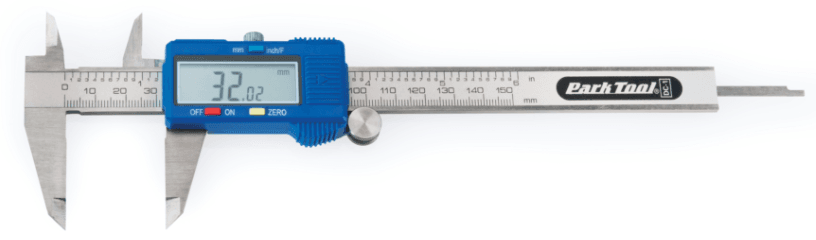
[Example of a digital caliper]
Once you know the diameter, the next thing is the length you need.
Fixed posts are simpler. If your current post is a good length, pull it out and measure it. If it's too long, you can cut it down (just mind the minimum insertion length), and if it's too short, you'll need to replace it.
For dropper posts, with your current post at your desired height, measure from the center of the saddle rails to the seat collar. That gives you the full extension, or "drop length".
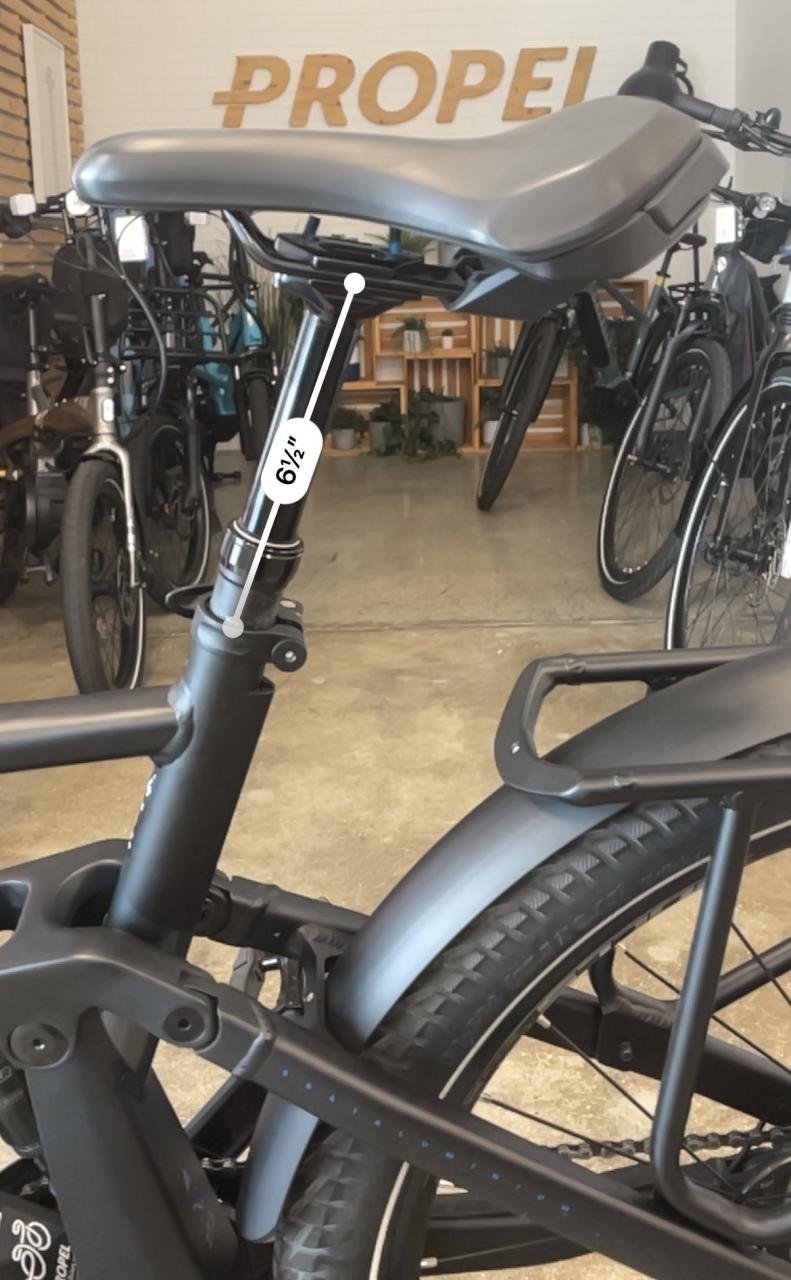
[example of full extension]
There are two more measurements that matter: the full insertion length and the maximum overall length.
Full insertion length is how far a post can go into the seat tube before hitting an obstruction, like a bend in the frame. Measure from the seat collar to that stopping point.
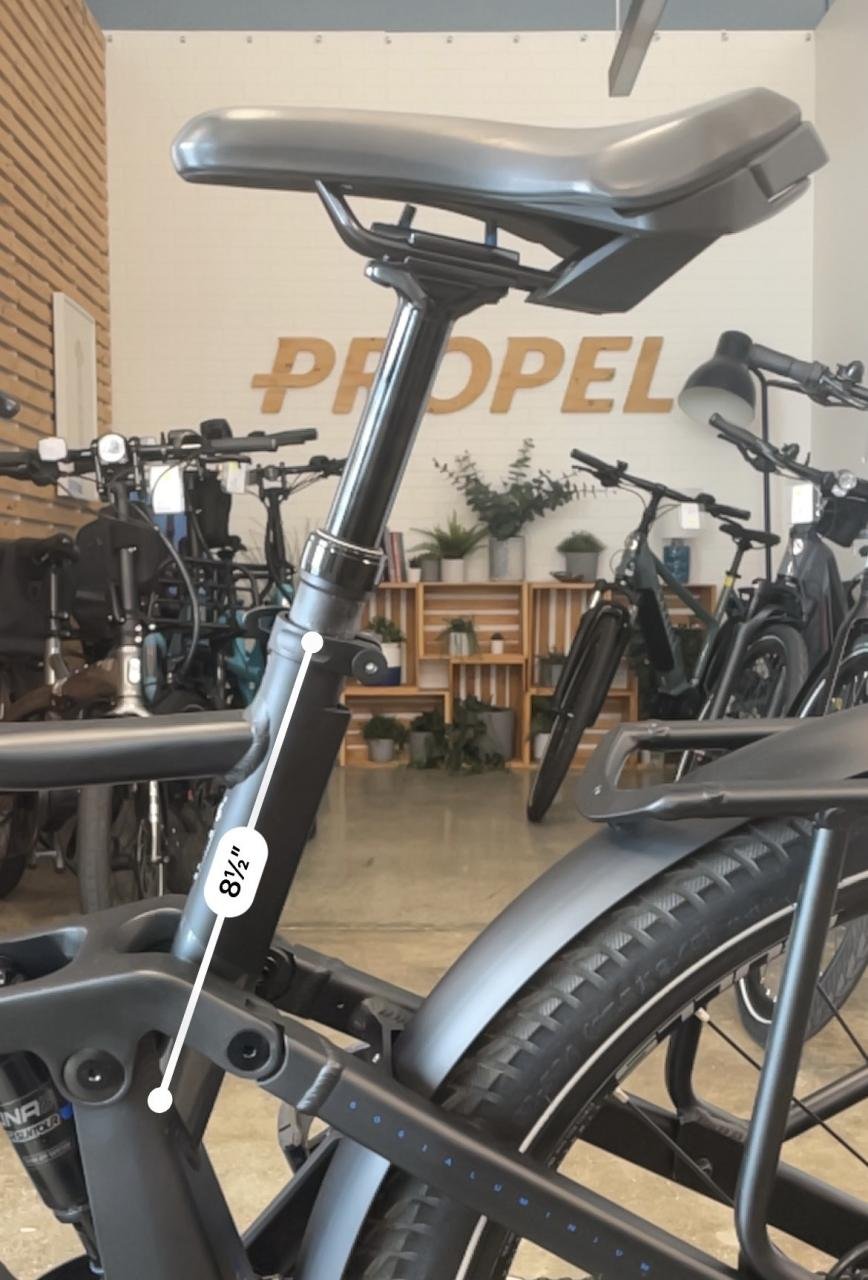
[example image of insertion measurement]
Maximum overall length is the longest dropper post that will fit you. Add the full extension and full insertion lengths together. Note: unlike a fixed post, a dropper post can't be cut to size.
[full extension + full insertion = maximum overall]
How to find your saddle height
Here's a quick way to check: with your heel on the bottom pedal and your leg relaxed, your leg should be fully extended. Then, when you pedal on the ball of your foot, you'll always have a slight bend in your knee. The right saddle height gets the most out of each pedal stroke and helps prevent joint and muscle pain.
Still stuck, or is this about your own bike? The service team answers these all day.