E-bike wheel sizes: why the best cargo bikes run the smallest wheels
20-inch wheels on a $10,000 bike aren't a compromise; they're the point. What wheel size actually decides on an e-bike, bike by bike from our floor.
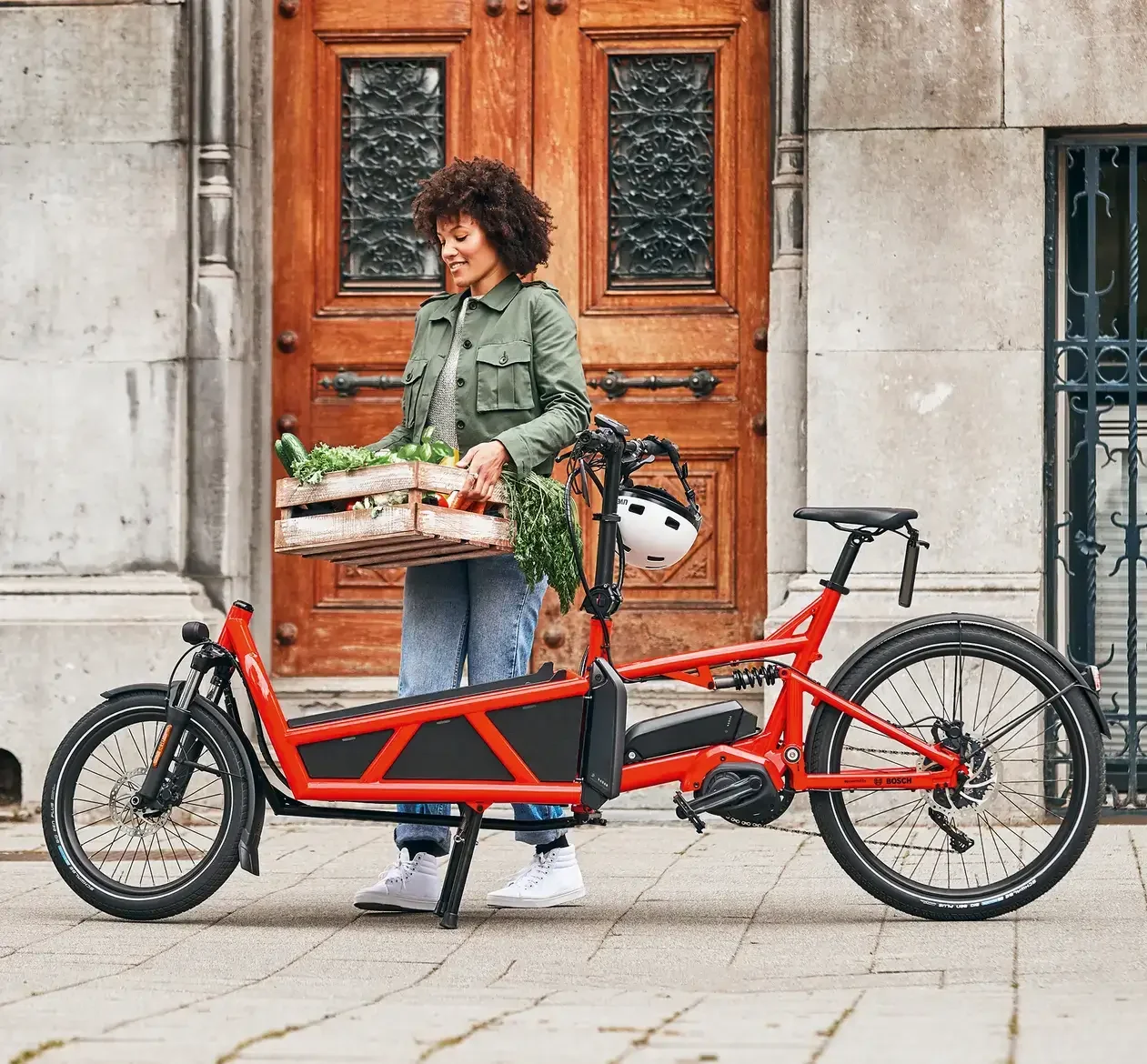
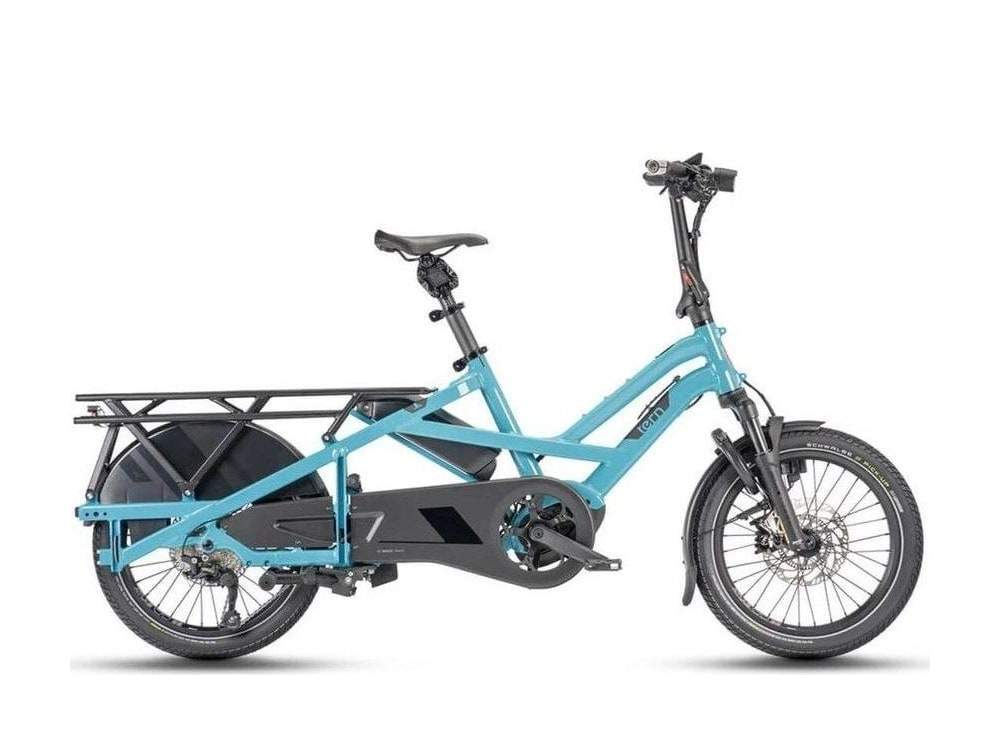
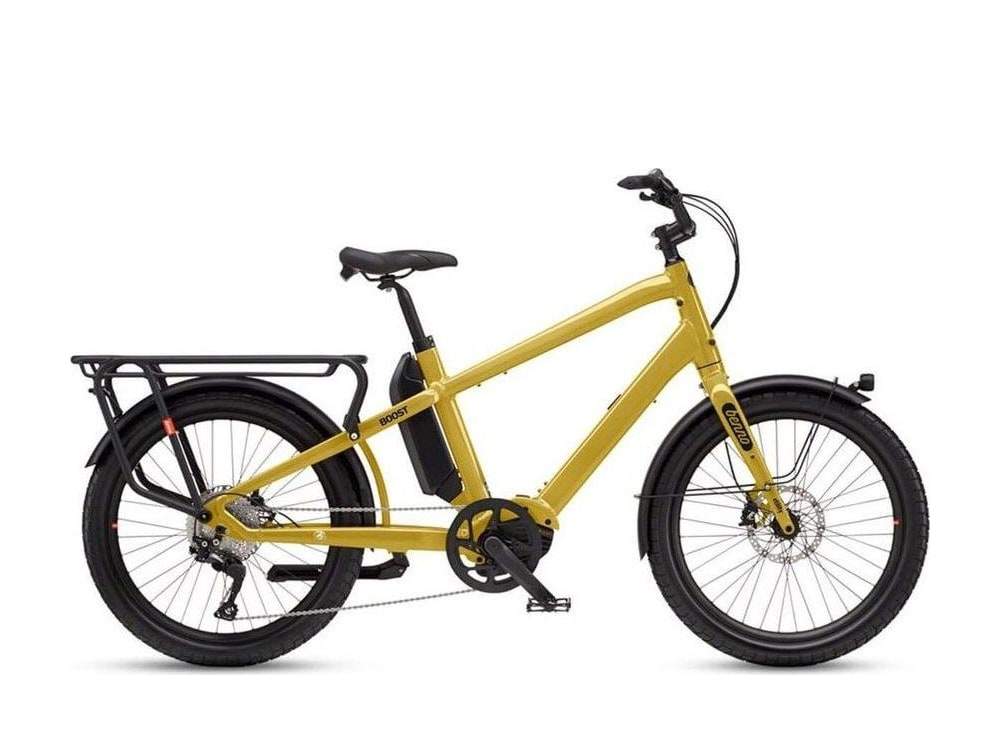
Walk our floor and count wheels. The Tern GSD, a bike that hauls two kids and a week of groceries, rolls on 20-inch wheels. The Urban Arrow Family pairs a 20-inch front with a 26-inch rear. The Benno Boost splits the difference at 24. Only the Gazelle commuters carry the full-size 28-inch wheels a road cyclist would recognize.
That pattern isn't cost-cutting. On e-bikes, and cargo e-bikes especially, small wheels are an engineering choice designers pay for on purpose. Most wheel-size advice online is inherited from unpowered road bikes, where big wheels genuinely help you preserve momentum. The motor changed that math, and this piece is about what wheel size actually decides now.
The motor retired the big-wheel advantage
On an unpowered bike, a large wheel carries speed: more momentum, fewer revolutions, smoother over gaps. That's why road bikes standardized on 700c. But nearly every e-bike we sell assists to 20 mph (Class 1) or up to a 28 mph cutoff regardless of wheel size; a 20-inch GSD and a 28-inch Gazelle both cruise at the cap. What the motor can't change is the four things wheel diameter still controls:
- Strength. Shorter spokes and a smaller rim make a stiffer, stronger wheel; leverage on the rim drops with diameter. That's why the 20-inch wheel under a loaded GSD shrugs off cargo weight that would stress a full-size wheel, and why so many of the strongest bikes we sell wear the smallest wheels.
- Load height. A small rear wheel lets the cargo deck or box sit low, and low cargo is the whole secret of a cargo bike that handles well. The Urban Arrow's 20-inch front wheel is what lets the box sit down between the wheels instead of riding up over one.
- Footprint. Small wheels shrink the whole bike. A GSD carries like a longtail but parks like a normal bike.
- One frame, every rider. Small wheels drop the standover, so a single frame adjusts across a couple's full height range instead of coming in four sizes. That's why household-shared cargo bikes standardized on them.
What we actually stock, size by size
| Size | On our floor | Why it's there |
|---|---|---|
| 20" | Tern GSD, HSD, Quick Haul; Vello; Urban Arrow front | Strength under load, low decks, compact parking, one-size frames |
| 24" | Benno Boost | Benno's Etility middle path: cargo-ready strength, closer-to-standard ride feel |
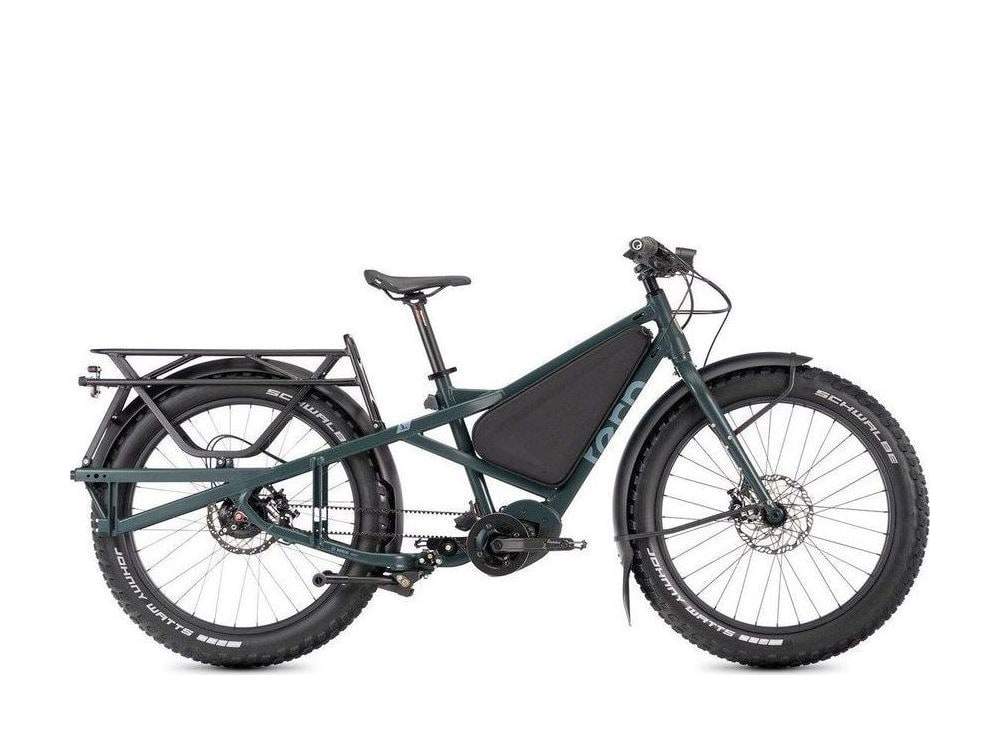
| 26" | Urban Arrow rear, Tern Orox | Load capacity with more roll-over for rough surfaces (the Orox is the off-road case) |
| 28" (700c) | Gazelle commuters | The classic upright Dutch ride: tall, smooth, unhurried |
The pattern to notice: size tracks the job, not the price. The 20-inch bikes on that list include some of the most expensive bikes in the shop.
The part everyone skips: the tire is the ride
Two bikes with identical rims can ride like different machines, because tire width and pressure govern comfort and grip more than diameter does. Most of what we sell ships on e-bike-rated Schwalbe rubber (Pick-Up on the cargo bikes, Marathon and Energizer on the commuters), though a few brands spec their own e-bike tire lines; Benno, for one, runs its own. For higher-speed 28 mph e-bikes the tire must carry Schwalbe's ECE-R75 e-bike rating; the same tire name often ships in rated and unrated versions, and only the rated one belongs on a 28 mph bike.
One maintenance quirk we tell small-wheel owners straight: a 20-inch wheel turns roughly 40 percent more times per mile than a 28-inch wheel, so the same tire compound wears proportionally faster on the small bike. Budget for rubber accordingly. Our tire size guide and rim and tire width compatibility guide cover what fits what.
And a request from our mechanics: don't try to change your bike's wheel size. The frame geometry, fender lines, brake mounts, and the motor's speed calculation are all built around the stock diameter. In fifteen years we've almost never done that job and been glad we did. If you want the ride to feel different, change the tire, not the wheel. It's a $60 to $100 experiment instead of a compromised bike.
How to use this when you shop
Stop filtering by wheel size and start from the job. Kids and groceries: 20-inch deck bikes and front-loaders (the cargo lineup). Upright daily commuting on decent pavement: the 28-inch Gazelle ride is exactly what a century of Dutch city cycling refined it to be, a rolling armchair. Rough surfaces and light off-road: the 26-inch Tern Orox in adventure. Tight apartment, elevator, or train commute: 20-inch Vello and Tern territory.
Then test ride two different sizes back to back; the difference explains itself in a block and a half. Book one here, or ask us why a specific bike wears the wheels it does. There's an engineering answer every time, and we like giving it.