Belt Drive or Steel Chain?
Belt drive versus a steel chain: how a Gates belt trades grease and chain replacements for a higher upfront cost and internal-gear-hub-only compatibility.
When people switch to a belt-driven bike, they stop lubing a chain, stop getting black marks on their pant leg and stop hearing metal grinding on metal. Belt drives now show up across more e-bike lineups, including a lot of the brands Propel carries, so here are the questions we hear most about them.
What is a belt drive and how does it differ from a bike chain?
A belt drive is a toothed band made of nylon and carbon-fiber strands, an alternative to a steel bicycle chain (the technology started in the auto industry). We work with Gates Carbon Drive, referenced throughout this article.
Steel chains stretch and wear and eventually need replacing. Carbon fiber doesn't stretch and doesn't rust, so a Gates belt runs consistently over its life. If you don't like the work or the mess of keeping a chain going, a belt is probably a good fit for you.
Pros
Easy to maintain: no grease, one solid moving part. More on care below.
Lasts longer: Gates factory-tests its belts to outlast a steel chain by 2–3x, though it still recommends regular inspection and replacement.
Cleaner: it's one solid piece with no links or grease, so cleaning is quick.
Quieter: no metal links rubbing on metal cogs, so none of the grinding you get from a dry chain.
Consistent over time: a chain’s links stretch and its metal wears the cog teeth; a one-piece carbon-and-nylon belt doesn’t stretch, so it holds its performance longer.
Cons
More costly: a new belt runs about $100–$150 depending on size and availability (a steel chain is roughly $20–$50), and new cogs run $100–$200 apiece depending on size and spline pattern. The extra cost tends to pay for itself in lower maintenance.
Not compatible with all frames: the frame needs either a split in the chainstay (a coupling break) so the continuous belt can slip over the rear triangle, or an elevated-chainstay design that clears the belt without a split (there you install the belt by removing the rear wheel).
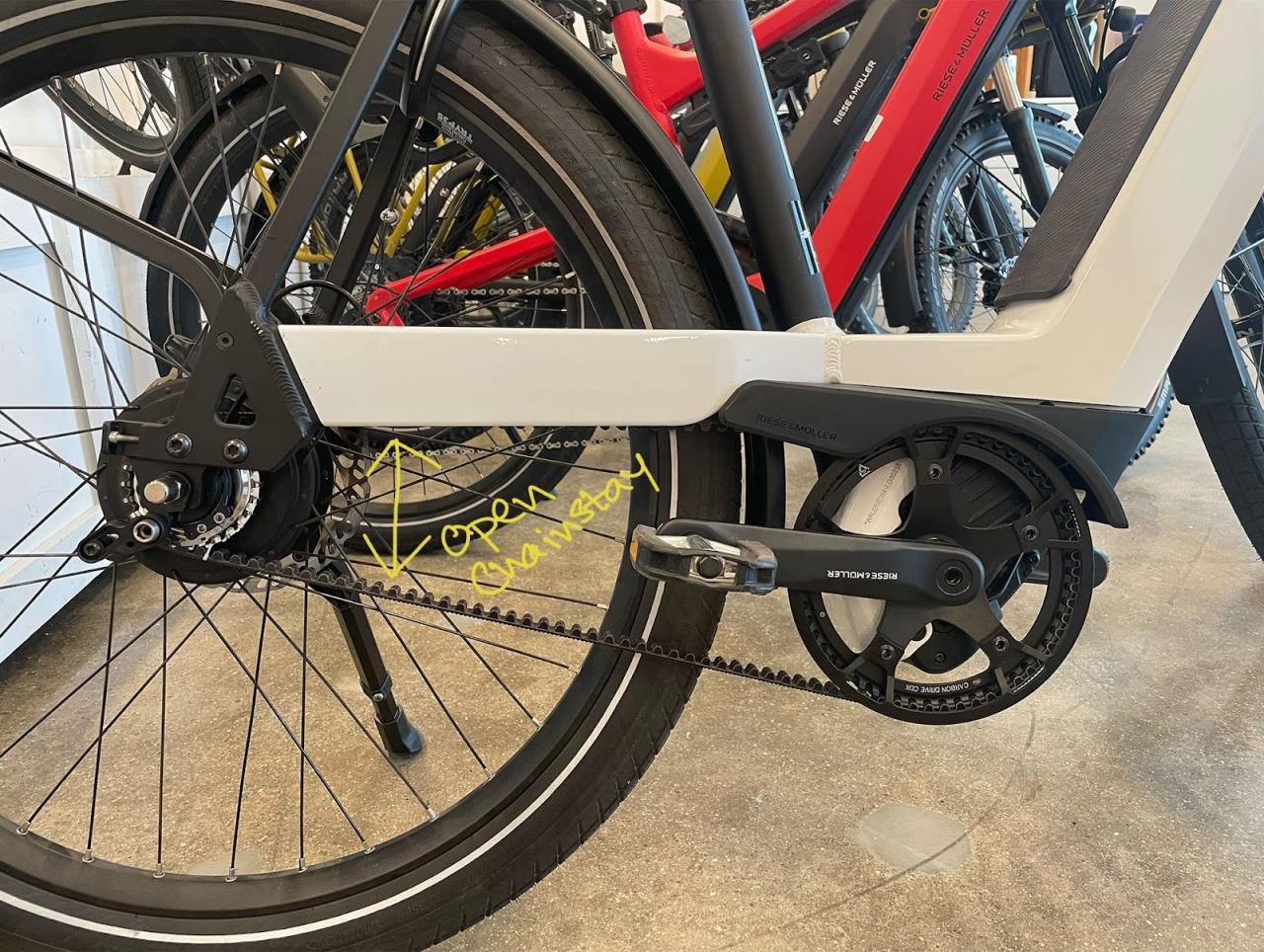
Elevated Chainstay
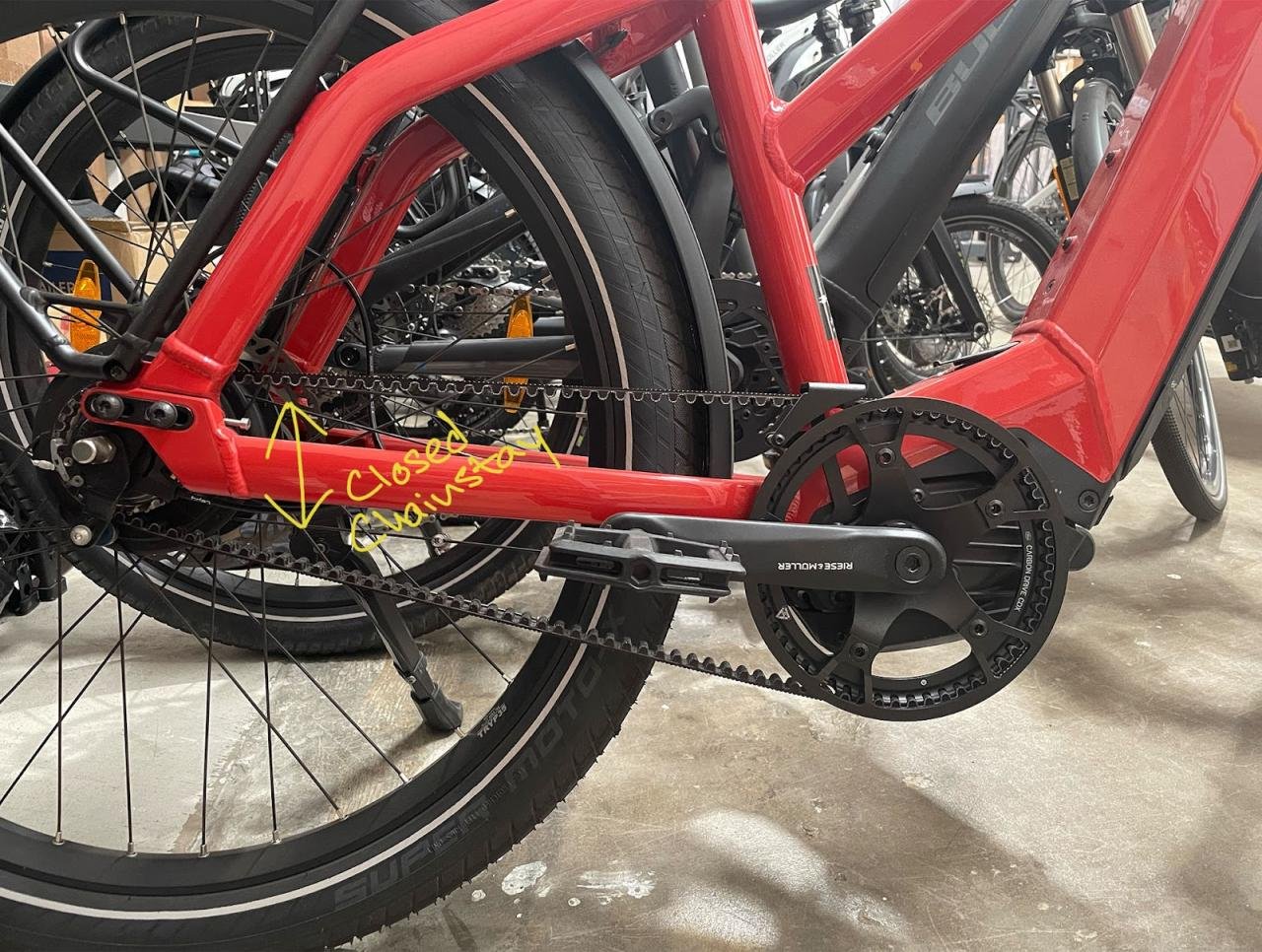
Coupling break on the rear triangle
Not compatible with an external derailleur: belts can’t sit at an angle, so they only work with internal gear hubs, Pinion gearboxes, and single speeds.
No trailside repair: if a belt gets damaged or cracks mid-ride, you can't fix it the way you can patch a broken chain link. It's rare, but it's worth knowing.
Still stuck, or is this about your own bike? The service team answers these all day.